
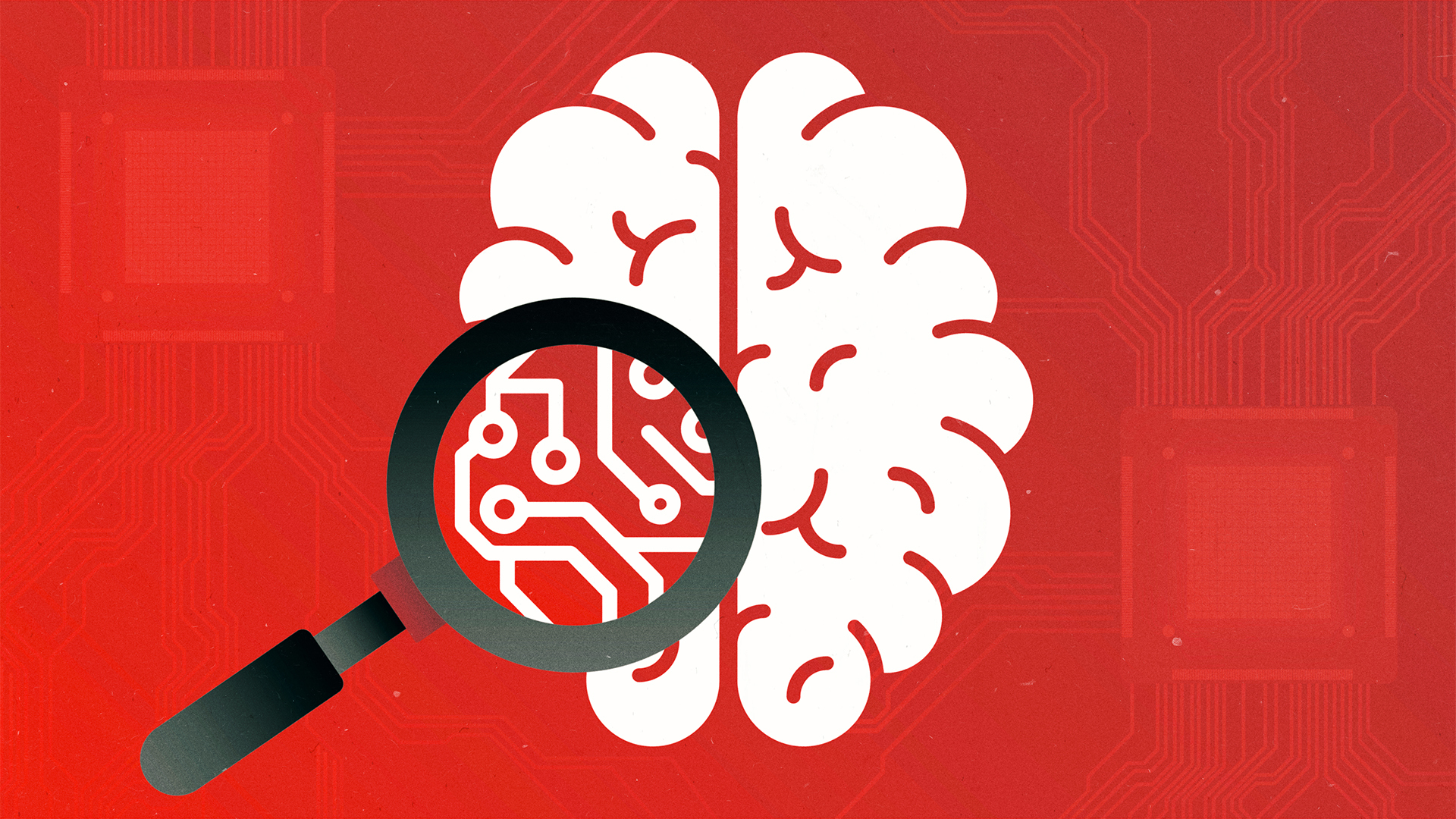
Neuroscience and artificial intelligence have long shared a common interest: understanding the emergence of intelligence. Both fields have traditionally tackled this challenge from different angles. However, recent advancements are bridging the gap, allowing for collaborative exploration of this complex question.
At Carnegie Mellon University, experts in neuroscience are employing cutting-edge AI and machine learning models to gain insights into how the brain perceives and processes information. Concurrently, AI researchers are drawing inspiration from biological intelligence to enhance machine capabilities. This interdisciplinary approach is laying the foundation for the burgeoning field of NeuroAI.
NeuroAI at Carnegie Mellon
Maggie Henderson, an assistant professor of psychology at Carnegie Mellon’s Neuroscience Institute, is at the forefront of this effort. Her research focuses on how the human brain interprets visual stimuli, transforming complex inputs into recognizable objects and scenes. By leveraging functional magnetic resonance imaging (fMRI) data, Henderson’s team creates models predicting the brain’s visual responses.
AI breakthroughs, particularly in computer vision, have provided new methodologies to examine the brain. Deep neural networks, capable of performing high-level visual tasks, offer insights into how neurons in the human brain react to visual information. This mutual exchange between AI and neuroscience is redefining the field.
Collaborative Research and National Priority
David Badre, director of the Neuroscience Institute, emphasizes the national significance of NeuroAI. “The Neuroscience Institute’s work in NeuroAI aligns closely with federal funding priorities in artificial intelligence and neurotechnology,” he states.

Collaborative projects like the Simons Collaboration on Ecological Neuroscience (SCENE) are pushing boundaries. This $80 million initiative seeks to understand how the brain transforms perception into action in real-world settings. Carnegie Mellon’s Xaq Pitkow plays a pivotal role, developing mathematical frameworks to connect neural processes with computational principles.

Projects like MICrONS, co-funded by IARPA and the NIH Brain Initiative, illustrate the immense potential of NeuroAI. By mapping dense neural networks, researchers are gaining unprecedented insights into brain structure and function, paving the way for innovative AI designs.
Restoring Sensory Functions Through Models
Jenelle Feather, an assistant professor of psychology, explores how the brain processes sensory data using computational models. Her work could revolutionize hearing aid design and brain-machine interfaces by aligning AI processing with biological systems.

Feather notes the potential of “stimulus computable” models, which predict neural responses from sensory inputs, for translational research. Such models could simulate hearing impairments and improve assistive technology design.
Exploring Intelligence through Animal Behavior
Aran Nayebi, a Carnegie Mellon assistant professor, focuses on understanding intelligence by observing animal learning. Unlike AI, animals learn and adapt without explicit instructions, offering valuable insights for developing more autonomous AI systems.

Nayebi’s NeuroAgents Lab develops AI systems that learn and adapt to changes, reflecting the behaviors observed in nature. This research aims to create adaptable robots and smarter technologies.
Carnegie Mellon’s Role in NeuroAI
Carnegie Mellon has long fostered collaboration between cognitive scientists and AI researchers. Michael J. Tarr, a prominent figure in this effort, highlights the university’s leadership in combining the study of natural and artificial intelligence.

“When the AI revolution began to reshape how we think about intelligence, Carnegie Mellon was uniquely positioned to unite its deep expertise in the science of the mind with advances in artificial intelligence,” Tarr said. The university’s ongoing efforts in NeuroAI aim to uncover discoveries that benefit society by integrating insights from both fields.
Read More Here




Comments are closed.