
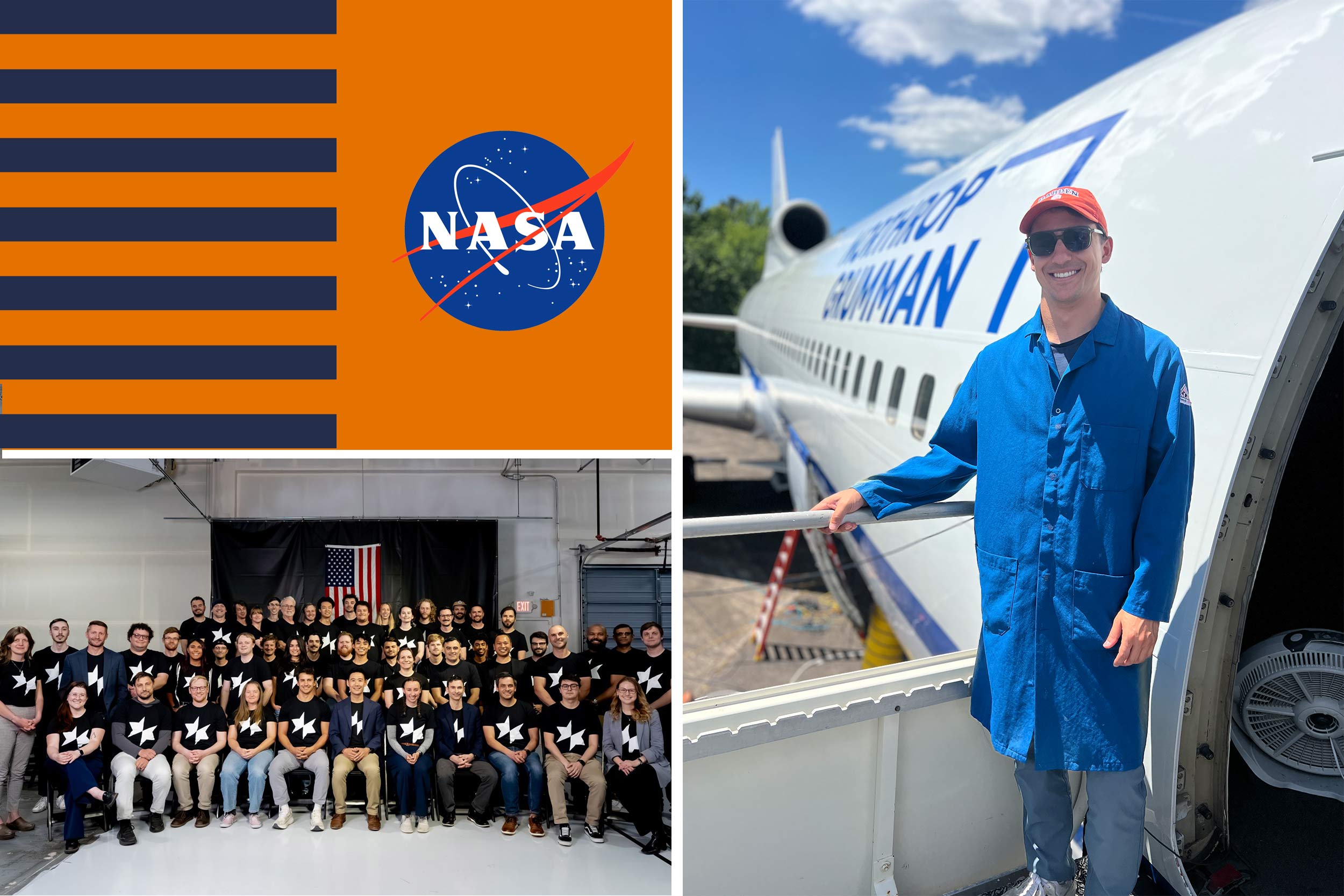
In the vast expanse of space, a NASA satellite is on a precarious journey, hovering just 250 miles above Earth. A confluence of atmospheric drag and unexpected solar activity has set the Neil Gehrels Swift Observatory on a collision course with a fiery demise.
In response to NASA’s urgent call for assistance, Katalyst Space, a burgeoning Colorado-based company, was commissioned to devise an unprecedented solution. The mission: construct a robotic spacecraft to intercept the satellite and elevate it to a safer orbit. This has never been achieved before.
Nicolaas Drapanas, a University of Virginia alumnus and systems test engineer, played a pivotal role in this rapid-response project. “The team worked around the clock to design, build, test, break, redesign, retest, integrate and launch the LINK spacecraft in nine months,” Drapanas remarked, highlighting the extraordinary pace compared to the usual multi-year timelines.
He continued, “The gravity of the mission, rescuing one of NASA’s flagship telescopes, was our guiding light. The urgent timeline motivated the team to sustain that pace.”
The Unconventional Path
Drapanas’ route to Katalyst Space was far from linear. At UVA, he pursued economics but simultaneously nurtured a fascination with science, spurred by the “How Things Work” course. “As an undergrad, I took the famous How Things Work course, physics for the masses, and fell in love with natural science,” he said.
Despite starting his career in investment consulting, Drapanas’ enthusiasm for science led him to join hardware test teams at electric vehicle startups before eventually moving to Boulder, Colorado, to join Katalyst Space.
At that juncture, NASA chose Katalyst Space to undertake the critical mission of saving the Swift observatory.
Challenges and Future Prospects
To meet the tight deadline, Katalyst procured the final available Northrop Grumman Pegasus rocket, attaching their LINK robot to its nose. On July 3, a modified airliner took off from the Marshall Islands, launching the rocket at high altitude to chase the satellite traveling at 17,000 mph.
Unfortunately, the mission encountered a setback. Control issues in orbit thwarted the spacecraft’s attempt to rescue the observatory, despite extensive troubleshooting. Consequently, NASA and Katalyst decided against the risky maneuver of grabbing the satellite. Instead, the mission pivoted to testing other capabilities, aiming to advance future satellite repairs and even routine robotic maintenance in space.
Read More Here



![Robert Harmon Celebrates 99th Birthday at UVA’s Homecomings Weekend[embed]https://www.youtube.com/watch?v=c_VPFnE8x-w[/embed]](https://realnewsfast.com/wp-content/uploads/2026/10/Robert-Harmon-Celebrates-99th-Birthday-at-UVAs-Homecomings-Weekendembedhttpswwwyoutubecomwatchvc_VPFnE8x-wembed-300x200.jpg "Robert Harmon Celebrates 99th Birthday at UVA’s Homecomings Weekend[embed]https://www.youtube.com/watch?v=c_VPFnE8x-w[/embed]")
![Environmental Opera “Auksalaq” Opens UVA’s Arts on the Hill Series[embed]https://www.youtube.com/watch?v=PjYuP9wh3Hw[/embed]](https://realnewsfast.com/wp-content/uploads/2026/10/Environmental-Opera-Auksalaq-Opens-UVAs-Arts-on-the-Hill-SeriesembedhttpswwwyoutubecomwatchvPjYuP9wh3Hwembed-300x200.jpg "Environmental Opera “Auksalaq” Opens UVA’s Arts on the Hill Series[embed]https://www.youtube.com/watch?v=PjYuP9wh3Hw[/embed]")
![New documentary explores Elizabeth Holmes’ final days before prison[embed]https://www.youtube.com/watch?v=GGJSRFWALTI[/embed]](https://realnewsfast.com/wp-content/uploads/2026/10/New-documentary-explores-Elizabeth-Holmes-final-days-before-prisonembedhttpswwwyoutubecomwatchvGGJSRFWALTIembed-300x200.jpg "New documentary explores Elizabeth Holmes’ final days before prison[embed]https://www.youtube.com/watch?v=GGJSRFWALTI[/embed]")