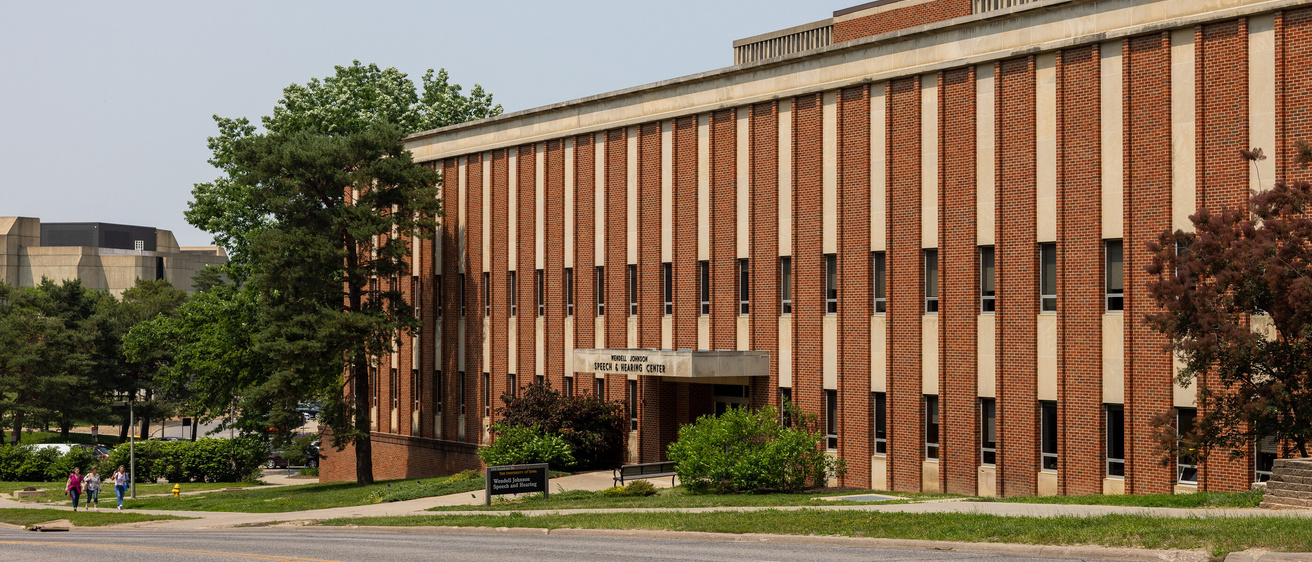
In a significant development for the University of Iowa, the Speech, Language, and Hearing Clinic, previously known as the Wendell Johnson Speech and Hearing Center, has transitioned to a new location. This move marks the continuation of over five decades of groundbreaking research in communication sciences and disorders, now taking place in the Health Sciences Academic Building.
The relocation aligns with the university’s 10-year facilities master plan, which includes the removal of the original Wendell Johnson building. Situated at 302 S. Grand Ave., the new facility also hosts the Department of Health, Sport, and Human Physiology, the exercise oncology clinic, and the Department of Physical Therapy and Rehabilitation Science. This centralized location is designed to foster collaboration among faculty, staff, and students, ultimately enhancing the educational environment and expanding service outreach throughout Iowa.
Eric Hunter, the department executive officer for the Department of Communication Sciences and Disorders, emphasized the importance of the new facility: “This new building will have a great impact on people, communities, and the direction the department is moving. We’re thinking about the future and also are passing this baton to the next generation to continue the work and tradition that has gone on before us.”
Leaders in Communication Sciences
For over a century, Iowa has been a leader in communication sciences, thanks to pioneers like Lee Edward Travis and Carl Seashore. These figures were instrumental in establishing speech and hearing science as an academic discipline. Seashore, who was both the head of the UI Department of Psychology and dean of the Graduate College, integrated various fields such as developmental psychology and otolaryngology to form this new area of study.
Travis earned one of the first PhDs in speech pathology in 1924 and led the Iowa program throughout the 1930s. Wendell Johnson furthered this legacy, becoming a prominent figure in speech-language pathology, particularly noted for his research on stuttering.
Johnson’s academic journey included a Bachelor of Arts in 1928, a master’s degree in 1929, and a PhD in 1931 from Iowa. He introduced groundbreaking courses in semantics and stuttering therapy and served in key administrative roles within the university’s speech pathology program. Hunter remarked, “One of the big things he did was bring a real public eye to the work that was being done. He was just very vocal, having events and being in the public. He was able to be a voice, and I think it added a lot of prominence to the work being done at Iowa.”
Constructed in 1967, the Wendell Johnson Speech and Hearing Center advanced research in areas like audiology, language disorders, and neurogenic communication problems. Its anechoic chamber, the first of its kind in a U.S. communication sciences department, was a notable feature that facilitated cutting-edge audio research.
Advancing in a Modern Facility
The University of Iowa continues to excel in communication sciences, maintaining top rankings in audiology and speech-language pathology according to U.S. News & World Report. The clinic, which has handled over 700 audiology visits and 1,400 speech-language visits in the past six months, offers comprehensive services for various communication disorders.
The new Health Sciences Academic Building enhances the clinic’s capacity to serve more individuals and enriches student training. Students benefit from practical, hands-on experiences under the guidance of leading faculty members. The facility features modernized clinical areas, integrated technology, and access to interprofessional resources, with specialized spaces for both child and adult research participants.
Among the new features is a behavioral observation lab, complete with an acoustically isolated room and soundstage. This setup allows researchers to simulate different environments and study interactions in varied contexts. Hunter noted ongoing efforts to honor Wendell Johnson’s legacy in the new clinic, which will include a painting of Johnson, some of his words, and interpretive materials highlighting the department’s history and influence.
“The new building is kind of a representation of what the old building was,” Hunter stated. “The University of Iowa and Iowa as a state are very pragmatic. We’re always thinking about how to make things purposeful, and that culminated in how our department grew. The previous building was forward-thinking and cutting edge, but it was also practical, and that’s how the new building is, too. It’s going to be a gem for the university and the field.”
Read More Here