
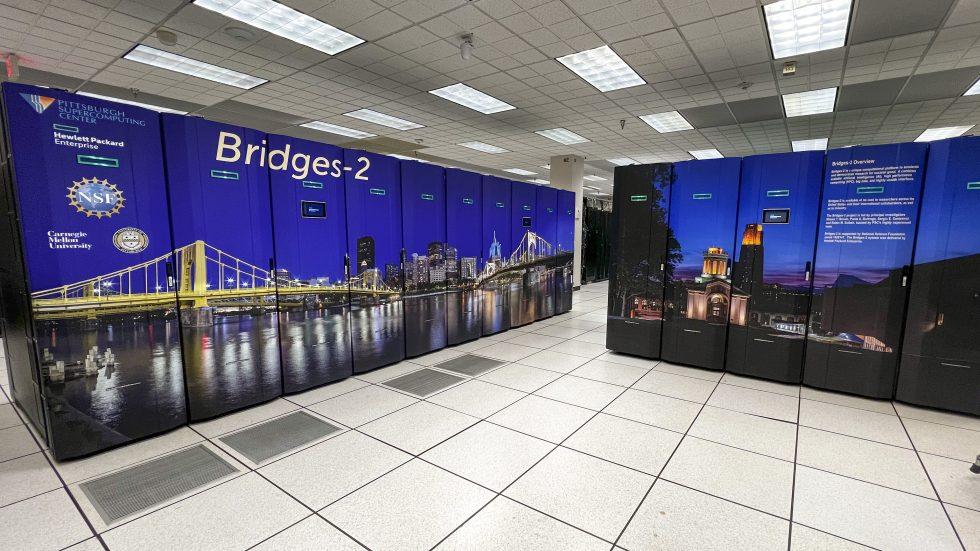
With a significant boost from the National Science Foundation, the Pittsburgh Supercomputing Center is set to revolutionize the landscape of high-performance computing. Bridges-3, the upcoming supercomputer, is poised to empower researchers, educators, and students with cutting-edge computational capabilities, paving the way for advancements in various scientific and technological fields.
NSF Backs Bridges-3 with $10 Million Award
In a move to support the growing demand for advanced computing, the National Science Foundation has allocated $10 million for the development of Bridges-3. This next-generation supercomputer will be constructed as part of a collaborative effort between Carnegie Mellon University and the University of Pittsburgh, aiming to broaden access to high-performance computing resources nationwide.
Bridges-3: A Leap in Computational Power
Designed to tackle the complexities of modern-day AI models and intricate scientific queries, Bridges-3 will offer the computational power necessary for advanced simulations and massive data analysis. Theresa Mayer, Vice President for Research at Carnegie Mellon University, emphasized, “Advanced computing has become foundational to breakthroughs across nearly every field.”
Bridges-3 will incorporate the latest NVIDIA B200 GPUs along with high-core-count AMD CPUs, complemented by extensive memory and rapid data storage capabilities. This setup aims to surpass the capabilities of its predecessor, Bridges-2, supporting a wide range of computational needs.
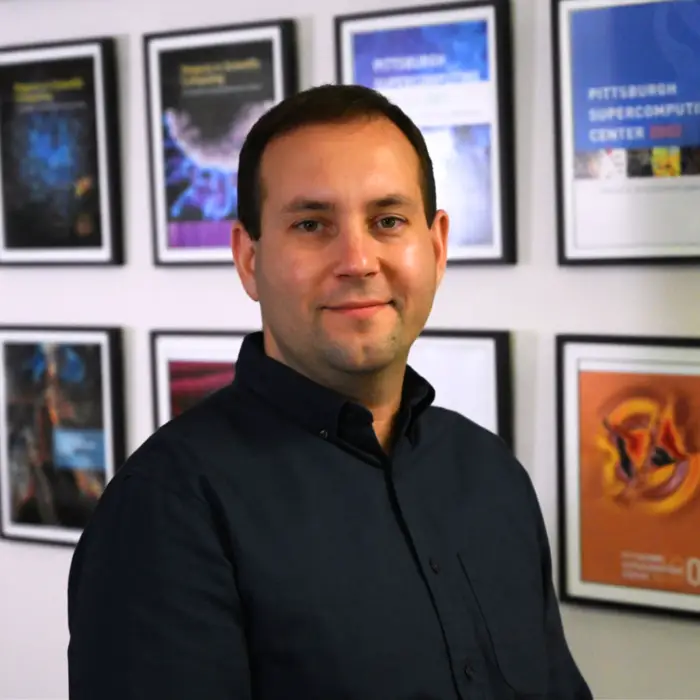
The system is engineered to be user-friendly, allowing individuals at various levels of expertise to effectively utilize its resources. Bruno Abreu, PSC’s deputy scientific director, notes that Bridges-3 will continue the successful practices of its predecessors, “maintaining all the capabilities of its predecessor while offering state-of-the-art GPUs and CPUs.”
Enhancing Accessibility and Education
With the integration of familiar software interfaces from Bridges‑2, the transition to Bridges-3 will be seamless for existing users. Additionally, connectivity to the Leadership‑Class Computing Facility (LCCF) ensures continuity for community workflows.
Bridges-3 will be primarily allocated through NSF’s ACCESS program and the National Artificial Intelligence Research Resource (NAIRR) Pilot, ensuring that even institutions lacking local HPC resources can benefit. PSC’s executive director, Barr von Oehsen, asserts, “With Bridges-3, we’re not just upgrading hardware, we’re renewing our promise to serve the researchers, educators and students across the country.”

Besides supporting research, Bridges-3 will contribute to education and workforce development through its training programs, workshops, and internships. These initiatives aim to equip students and researchers with essential computational and AI skills.
Construction of Bridges-3 by Hewlett Packard Enterprise is anticipated to begin at PSC’s new data center in early 2027, with full operational capacity expected by the summer of the same year.
Read More Here







Comments are closed.