
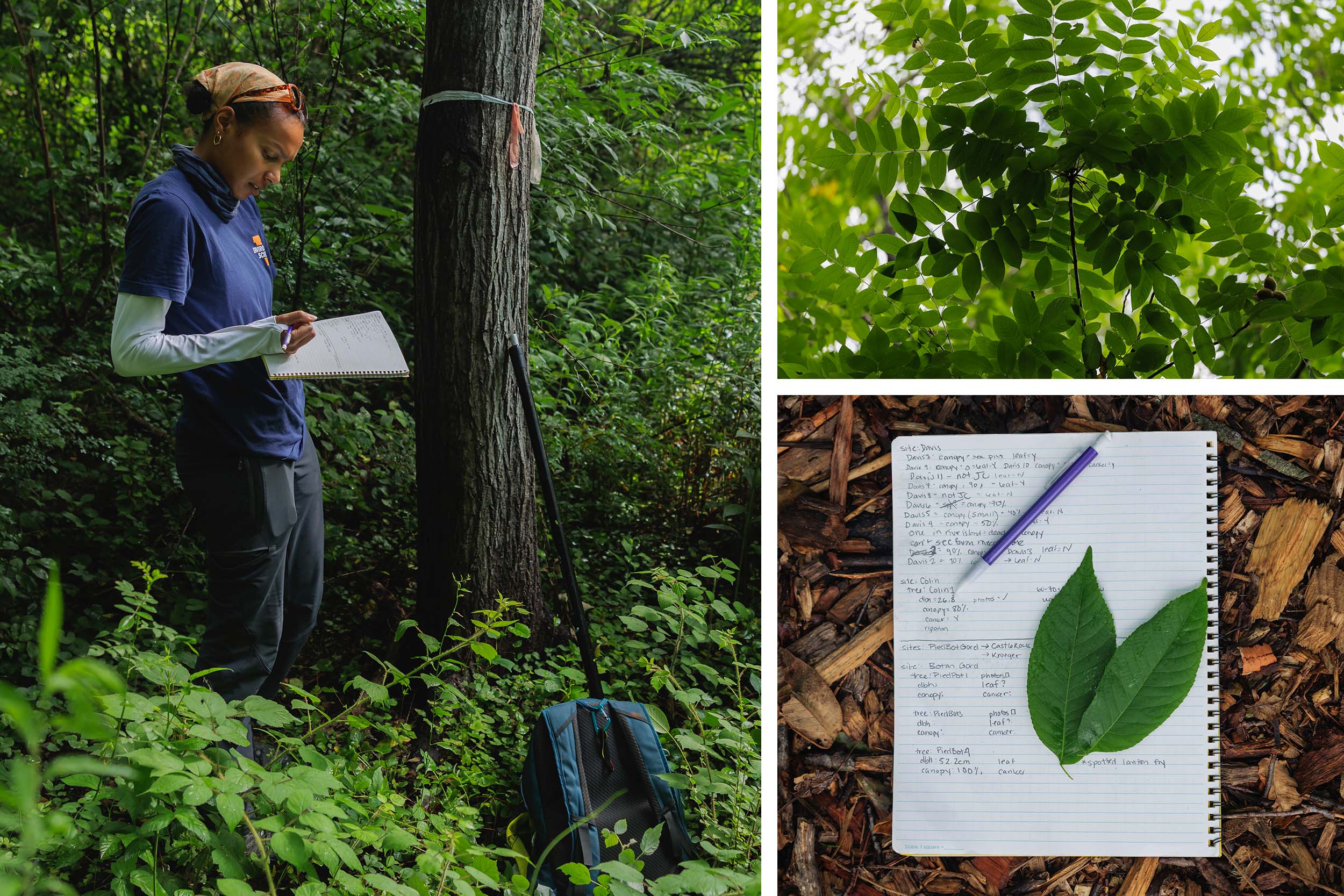
In a concerted effort to rescue the butternut tree, an essential species now facing significant threats, researchers are joining forces with the public to gather crucial data. This initiative, spearheaded by Mia Murray at the University of Virginia (UVA), aims to shed light on the decline of this cherished tree species across the eastern United States.
Murray, who began her journey with Blandy Experimental Farm in 2021 as part of the National Science Foundation’s Research Experience for Undergraduates program, has returned to UVA to pursue a master’s degree in environmental sciences. She is now collaborating with T’ai Roulston to better understand the butternut’s plight.
Understanding the Butternut’s Decline
Many threats to forests, such as fires and human activities, are well-known. However, pests and diseases also pose serious risks. The butternut tree, historically valued by communities along the eastern U.S., is now suffering from “butternut canker disease,” first identified in 1967. This non-native fungal pathogen attacks the tree’s trunk, creating cankers that eventually impede nutrient flow, ultimately causing the tree’s demise.
States along the East Coast and Midwest report losses of butternut trees ranging from 50% to 90%. Despite these alarming figures, Virginia has not been a significant focus in research efforts, leaving the situation in the state somewhat ambiguous.
Research Aims and Public Collaboration
Murray’s project focuses on locating and assessing wild butternut populations in Virginia, evaluating disease severity, and collecting samples for genetic sequencing. This genetic analysis aims to differentiate pure butternuts from hybrids with the Japanese walnut, which, although more resistant to the canker disease, are vulnerable to other diseases.
The research involves significant public collaboration. Using the iNaturalist app and other citizen science initiatives, the team seeks to update outdated or incorrect butternut locations. A call to action on the Blandy website invites individuals to participate by sharing locations or assisting in sample collection.
Participants range from individuals who can independently collect and send leaf samples to those who need assistance due to accessibility issues. For the latter, researchers employ a tree slingshot to collect samples from tall trees. Surveyors, another group of participants, receive maps of suspected butternut locations and provide photographic evidence to guide researchers for field verification.
Get Involved
Individuals interested in contributing to this vital research can reach out via email at uvabutternuts@virginia.edu.
Conservation Implications
This research has broader implications for conservation strategies. By gaining a comprehensive understanding of butternut canker disease in Virginia, researchers hope to identify naturally resistant trees that can inform future conservation efforts. This knowledge is crucial before pursuing interventions like hybridization or genetic modification.
Read More Here


![Robert Harmon Celebrates 99th Birthday at UVA’s Homecomings Weekend[embed]https://www.youtube.com/watch?v=c_VPFnE8x-w[/embed]](https://realnewsfast.com/wp-content/uploads/2026/10/Robert-Harmon-Celebrates-99th-Birthday-at-UVAs-Homecomings-Weekendembedhttpswwwyoutubecomwatchvc_VPFnE8x-wembed-300x200.jpg "Robert Harmon Celebrates 99th Birthday at UVA’s Homecomings Weekend[embed]https://www.youtube.com/watch?v=c_VPFnE8x-w[/embed]")
![Environmental Opera “Auksalaq” Opens UVA’s Arts on the Hill Series[embed]https://www.youtube.com/watch?v=PjYuP9wh3Hw[/embed]](https://realnewsfast.com/wp-content/uploads/2026/10/Environmental-Opera-Auksalaq-Opens-UVAs-Arts-on-the-Hill-SeriesembedhttpswwwyoutubecomwatchvPjYuP9wh3Hwembed-300x200.jpg "Environmental Opera “Auksalaq” Opens UVA’s Arts on the Hill Series[embed]https://www.youtube.com/watch?v=PjYuP9wh3Hw[/embed]")
![New documentary explores Elizabeth Holmes’ final days before prison[embed]https://www.youtube.com/watch?v=GGJSRFWALTI[/embed]](https://realnewsfast.com/wp-content/uploads/2026/10/New-documentary-explores-Elizabeth-Holmes-final-days-before-prisonembedhttpswwwyoutubecomwatchvGGJSRFWALTIembed-300x200.jpg "New documentary explores Elizabeth Holmes’ final days before prison[embed]https://www.youtube.com/watch?v=GGJSRFWALTI[/embed]")