
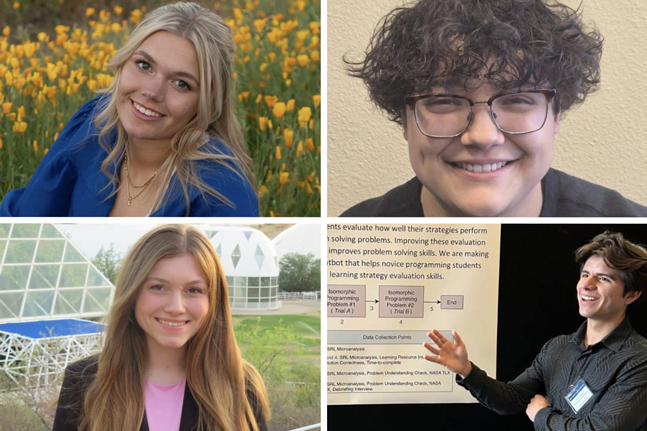
Gaining practical experience while still in school is a coveted opportunity for students aspiring to make a meaningful impact in their future fields. This summer, four students from Northern Arizona University (NAU) are set to embark on such a journey at the Barrow Neurological Institute.
These undergraduate scholars have been selected for prestigious 10-week internships at the Phoenix-based Barrow Neurological Institute. Open to students worldwide, these programs offer an exceptional chance to work with professionals in neurological disorders, speech pathology, and occupational therapy within real-world medical settings.
The path to this opportunity wasn’t easy. The students navigated a rigorous selection process, crafting multiple drafts of their letters of intent, gathering recommendations, and enduring challenging interviews.
The Role of Data in Medicine
Mandi Bluth, a data science major, has honed her skills in statistical analysis through coursework and participation in events like the American Statistical Association’s DataFest. She aims to apply her knowledge in practical scenarios that promote positive change, and her internship at Barrow is a step in that direction.
“Barrow is a place that means a lot to my family since my sister was treated there,” Bluth said. “Being selected to contribute to their work felt personal. I hope to gain real-world exposure to data analytics in a setting where the work truly makes a difference, grow as a data scientist and walk away knowing I contributed to a facility that means so much to my family.”
Noah Verdugo, also a data science undergrad, is enthusiastic about applying his programming skills in the healthcare sector. At NAU’s RESHAPE Lab, he explores the use of large language model (LLM) chatbots in computer science education, an experience that has prepared him for this next challenge.
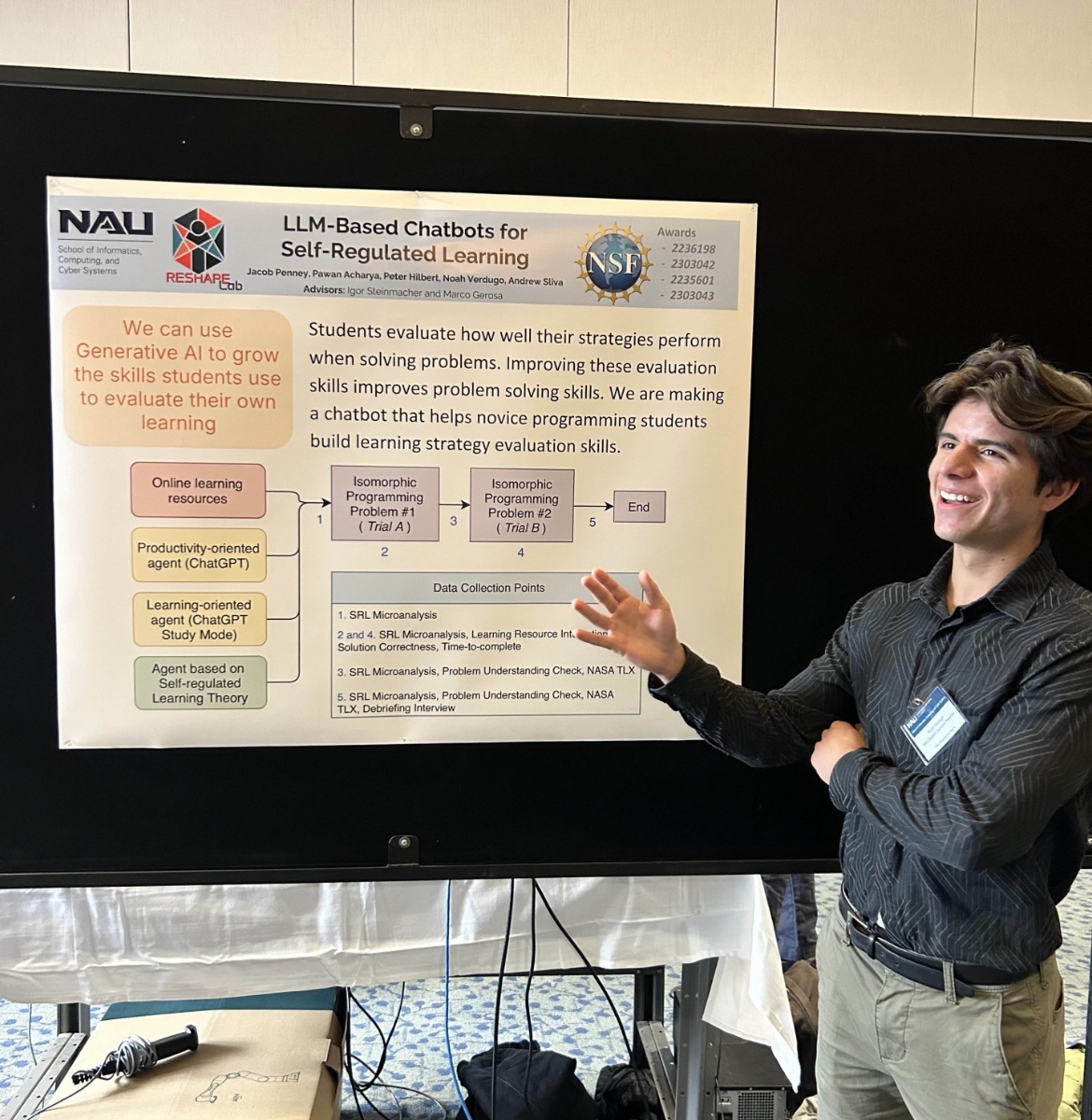
“Interning here has been such an amazing learning experience, and it’s allowed me to practice the skills I’ve learned from my classes,” Verdugo said. “Now, I hope to help better understand how data science and mathematics can be applied to the world of healthcare, especially neuroscience, and I am excited to learn from these doctors and their incredible research.”
Bluth and Verdugo will contribute to the Barrow Neurological Analytics Center, specifically the Racette Lab, focusing on neurodegenerative disease risk factors. They will build predictive models from clinical datasets to help medical professionals better understand and predict neurological conditions such as Parkinson’s disease.
Their efforts will culminate in a presentation at Barrow’s symposium at the end of the summer. “Neurodegenerative diseases affect millions of people and their families, and there is so much we still don’t understand about them,” Bluth noted. “Barrow uses data to find answers, including searching for an earlier diagnosis and underlying causes. This work has the potential to improve how patients are diagnosed and the quality of treatment.”
Empowering Patient Recovery
Stefan Muñoz, an exercise physiology major, prepared extensively for his internship interview at Barrow, where he will assist in inpatient occupational therapy. His role will involve supporting therapists in their work with hospitalized patients.
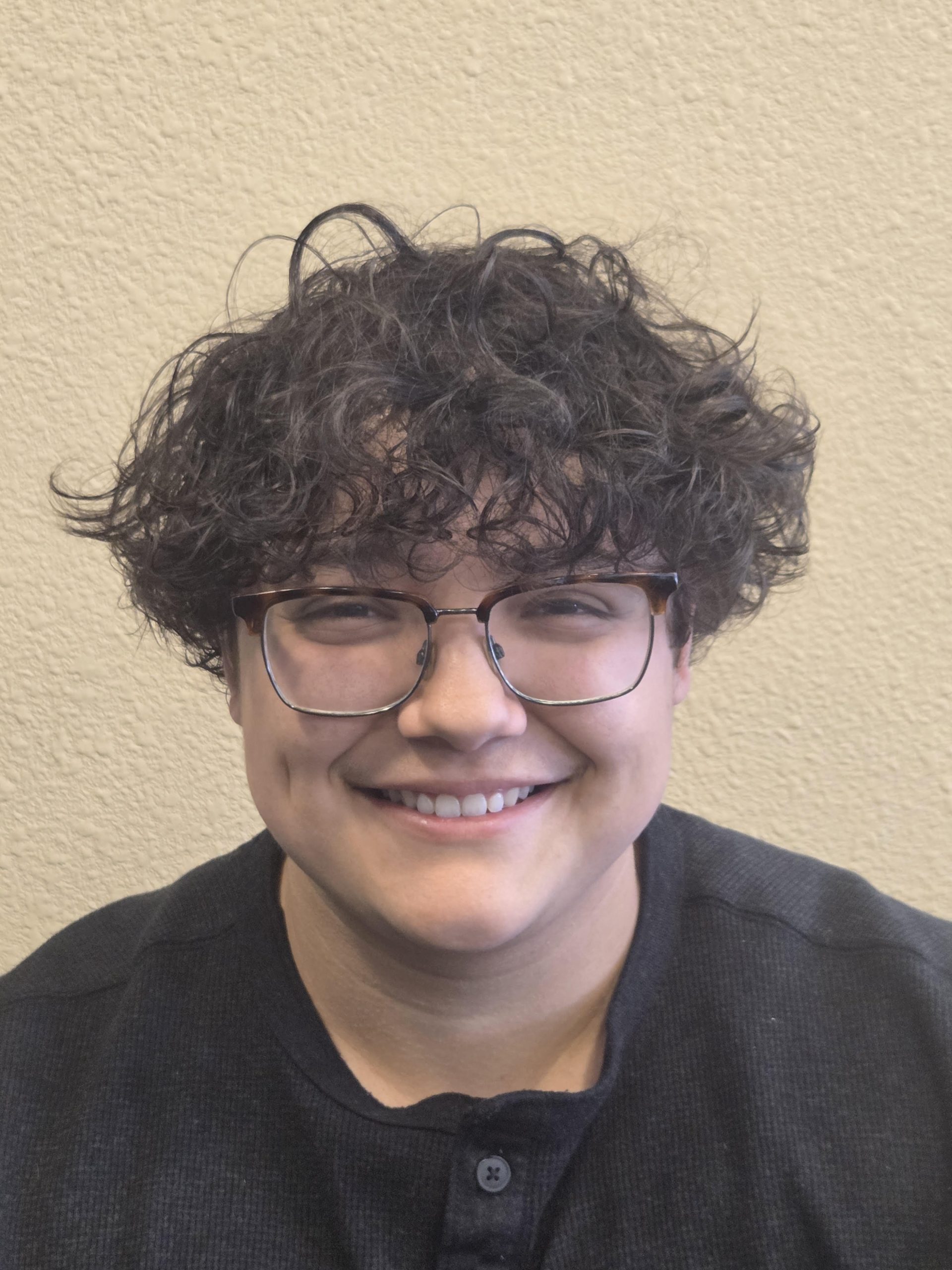
“That day was the proudest I’ve ever felt of myself to date,” Muñoz said. “I hope that, with this internship, I really get to see the inner workings of what it means to be an occupational therapist and walk out with knowledge I can later apply to my schooling.”
With aspirations of becoming a physical therapist specializing in pediatric care or aiding those with acute disabilities, Muñoz sees this internship as a pivotal step in his journey. He envisions a future where he can work closely with patients to help them regain independence.
Speech Pathology in Practice
Wyatt Peterson, majoring in communication sciences and disorders, will intern in speech-language pathology at St. Joseph’s Hospital. She eagerly anticipates observing experienced professionals as they treat patients with swallowing disorders, a prevalent issue among older adults and stroke survivors.

“I haven’t been able to observe much of the medical side of speech pathology, so I am very excited to see and learn from it,” Peterson said. “I will be learning from experienced speech-language pathologists and observing and aiding patients from all walks of life with a variety of conditions.”
Peterson will assist with feedings, observe cognitive evaluations, and witness procedures like modified barium swallow studies, which help clinicians assess swallowing safety. This experience will enhance her education in medical speech-language pathology, an area she feels particularly drawn to.
As Peterson begins NAU’s accelerated clinical speech-language pathology program, she remains open to multiple career paths, including bilingual language development.
Read More Here




Comments are closed.