Reviving the Colorado River Delta: A Decade of Binational Restoration Efforts
The once-vibrant Colorado River Delta, now constrained by dams and water diversions, is experiencing a revival. Through strategic water releases and collaborative efforts, sections of the dried-up riverbed are being transformed back into flourishing riparian habitats.
A comprehensive report led by the University of Arizona examines the impact of controlled water releases from 2014 to 2025 in Mexico’s lower Colorado River region. This report, published by the Center for Colorado River Studies at Utah State University, also provides a roadmap for future binational restoration initiatives. The full report can be accessed here.
“It’s hard to find some good news about the Colorado River, but we believe we have some to share,” stated Karl Flessa, professor emeritus at the University of Arizona’s Department of Geosciences and the report’s lead author. “The lessons learned from more than a decade of work show that a small amount of water can do big things.”
These water releases are part of the U.S.-Mexico Water Treaty of 1944, specifically under two addenda, which expire at the end of 2026. The initiative’s success hinges on continued cooperation and investment from both nations and non-governmental organizations.
Since restoration efforts began in 2014, there has been a noticeable increase in bird populations and biodiversity. The delta serves as a crucial stopover for migratory birds along the Pacific Flyway, and the resurgence of beavers and other wildlife is evident.
The 2014 restoration started with a “pulse flow,” a significant water release from Morelos Dam that lasted for 57 days, reintroducing water to the previously dry riverbed. This experiment allowed researchers to observe the ecological impact of water returning to the delta.
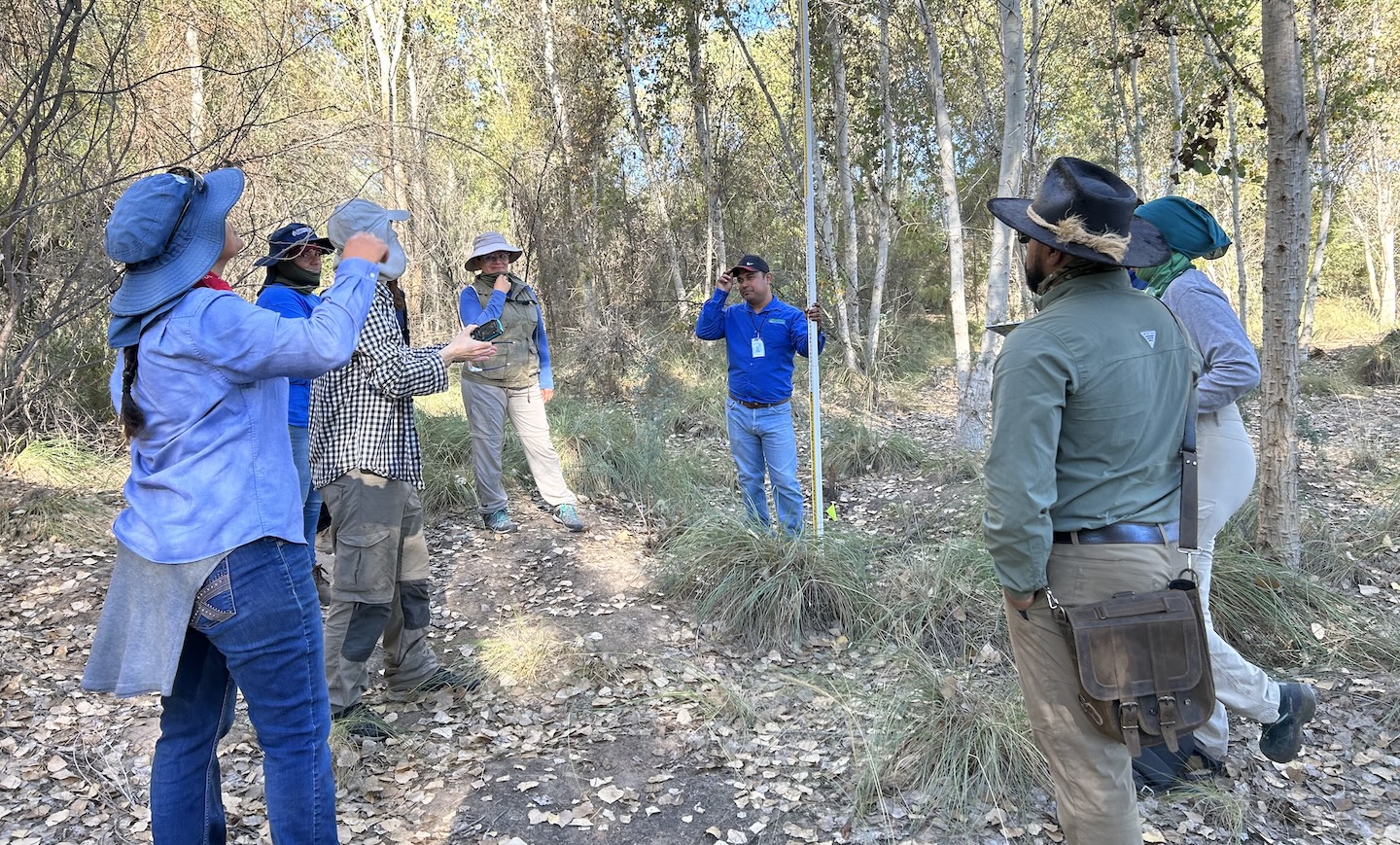
Environmental NGOs from both countries have since developed three restoration sites, shaping the terrain and planting native vegetation like cottonwood, mesquite, and willow trees. These plants once thrived in the delta’s natural environment.
In 2019, AZPM produced a story on revitalizing the Colorado River delta five years after the 2014 pulse flow.
“These NGOs actually have nurseries on site, in which they germinate an array of Sonoran Desert riparian plants. Those seedlings are then planted and carefully irrigated according to the habitat needs,” explained Martha Gomez-Sapiens, a research scientist at the University of Arizona and co-author of the study. “In some cases, you will see irrigation drip lines that go to each individual tree – a system designed to maximize water efficiency in this desert environment.”
The creation and maintenance of 1,381 acres of riparian vegetation have attracted birds and other wildlife. Water deliveries have raised water tables, supported existing flora, and extended the river’s flow.
Local communities benefit from these efforts through recreational, educational, and employment opportunities. The Laguna Grande complex, managed by the Tucson-based Sonoran Institute, even features a visitor center, highlighting the region’s renewed vitality amid water scarcity.
Although the 2014 pulse flow demonstrated the potential for habitat restoration, the report suggests that long-term delta revitalization requires ongoing water management. “Most of the pulse flow water infiltrated into the groundwater before it could be used by new vegetation,” noted Flessa. “Since then, we have learned how to use the water more efficiently for restoration of riparian habitat.”
The report emphasizes that restoration sites are not self-sustaining and require continuous maintenance, water allocations, and monitoring. According to the authors, just 6,890 acre-feet of water per year, approximately 0.05% of the Colorado’s total annual flow, is needed to maintain the current restoration sites. Additional water and funding could further expand these efforts.
“Effective and sustainable habitat restoration can be done with a little bit of water, a small amount of funding and a lot of hard work,” Flessa said.
The report’s other contributors include Eduardo González-Sargas from Colorado State University and Roberto Real Rangel from The Nature Conservancy in Mexicali, Mexico.
Read More Here




![Casey Scharf’s Journey: From UVA to Filming with Bill Murray[embed]https://www.youtube.com/watch?v=G-oCpAnX_ic[/embed]](https://realnewsfast.com/wp-content/uploads/2026/10/Casey-Scharfs-Journey-From-UVA-to-Filming-with-Bill-MurrayembedhttpswwwyoutubecomwatchvG-oCpAnX_icembed-300x200.jpg "Casey Scharf’s Journey: From UVA to Filming with Bill Murray[embed]https://www.youtube.com/watch?v=G-oCpAnX_ic[/embed]")