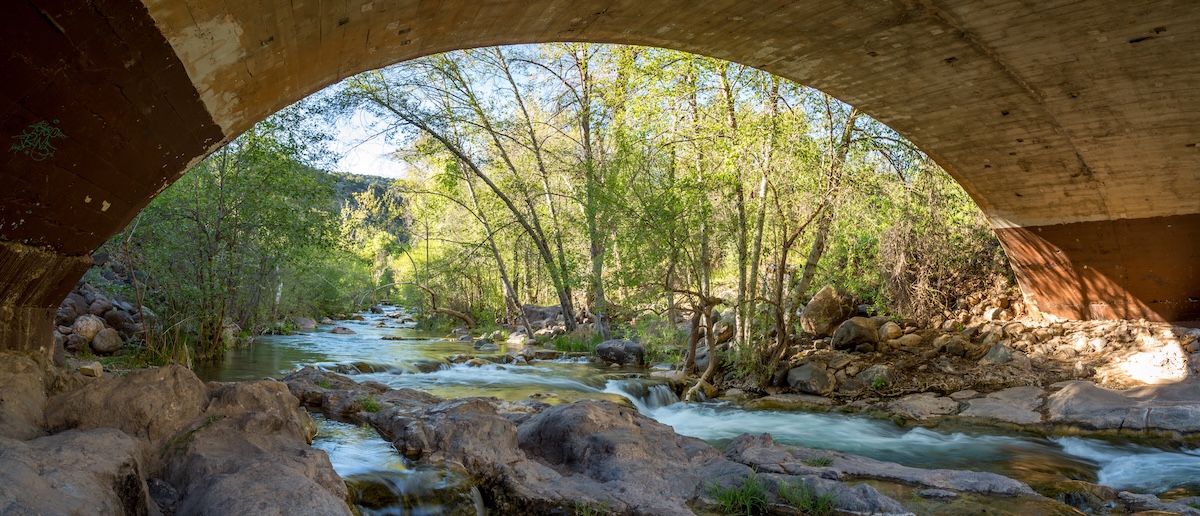
Arizona’s water future is under scrutiny as a new comprehensive report provides a pathway to address the state’s pressing water resource challenges. Released by a University of Arizona-led team collaborating with Arizona State University and Northern Arizona University, the detailed report explores actionable solutions for water availability concerns.
Katharine Jacobs, a retired professor of environmental science at U of A and the project’s principal investigator, emphasizes the urgency: “Given the current concerns about the reliability of Colorado River deliveries to Arizona, this is a critical time to be thoroughly exploring our water supply options.”
The Arizona Tri-University Recharge and Water Reliability Project, spearheaded by the Center for Climate Adaptation Science and Solutions at U of A’s Arizona Institute for Resilience, modeled water budgets for 51 groundwater basins, proposing management strategies that enhance water capture and recharge.
Key Findings and Strategies
- The study observes a decrease in total water storage statewide, linked to increasing heat and aridity.
- With over 95% of precipitation lost to evaporation, even marginal reductions could boost water supplies.
- The Mogollon Rim stands out for its potential to generate significant water volumes due to higher precipitation.
- Enhanced water recharge through improved land management, including forest thinning and fire management, could substantially benefit certain areas.
The report also introduces a Decision Support Framework to assist water managers in leveraging new data, alongside a Recharge Opportunities Matrix featuring over 50 methods for water collection and recharge. A comprehensive literature review backs the report’s 24 key findings.
Projections for Arizona’s water supply extend through the end of the century, offering a new level of precision, according to Giuseppe Mascaro, lead ATUR researcher for ASU. “This project has given the team an opportunity to demonstrate how accurately we can model both current and future water supply conditions,” he stated.
Marlana Hinkley, a U of A master’s student, highlighted the utility of the water supply data. “The water supply information that is provided in the Basin Profiles section of this report provides a great starting point for more detailed water supply and demand planning activities,” she noted.
A notable product of the ATUR project is a published framework in the journal Groundwater, aimed at improving groundwater recharge through strategic land and water management practices. This framework identifies opportunities for enhancing groundwater recharge via management activities related to forest and flood management.
Abe Springer, the lead ATUR researcher for NAU, emphasized the significance of preemptive water storage: “Getting water underground before it has a chance to evaporate is an important path towards enhancing recharge.”
Over 15 faculty members and more than 25 students and post-doctoral researchers have contributed to this project since its inception in January 2023. Initially directed by Thomas Meixner, former department head of hydrology and atmospheric sciences at U of A, the project continues to honor his scientific legacy.
Neha Gupta, ATUR project manager at U of A, remarked, “This project is a wonderful demonstration of how academics can work together with stakeholders and external partners to develop information to support water resources across the state, while also taking a leap forward on behalf of science.”
The Arizona Department of Water Resources requested the ATUR report, which received funding from the Arizona Board of Regents Technology and Research Initiative Fund, supporting crucial academic research for the state.
Read More Here


![Casey Scharf’s Journey: From UVA to Filming with Bill Murray[embed]https://www.youtube.com/watch?v=G-oCpAnX_ic[/embed]](https://realnewsfast.com/wp-content/uploads/2026/10/Casey-Scharfs-Journey-From-UVA-to-Filming-with-Bill-MurrayembedhttpswwwyoutubecomwatchvG-oCpAnX_icembed-300x200.jpg "Casey Scharf’s Journey: From UVA to Filming with Bill Murray[embed]https://www.youtube.com/watch?v=G-oCpAnX_ic[/embed]")