
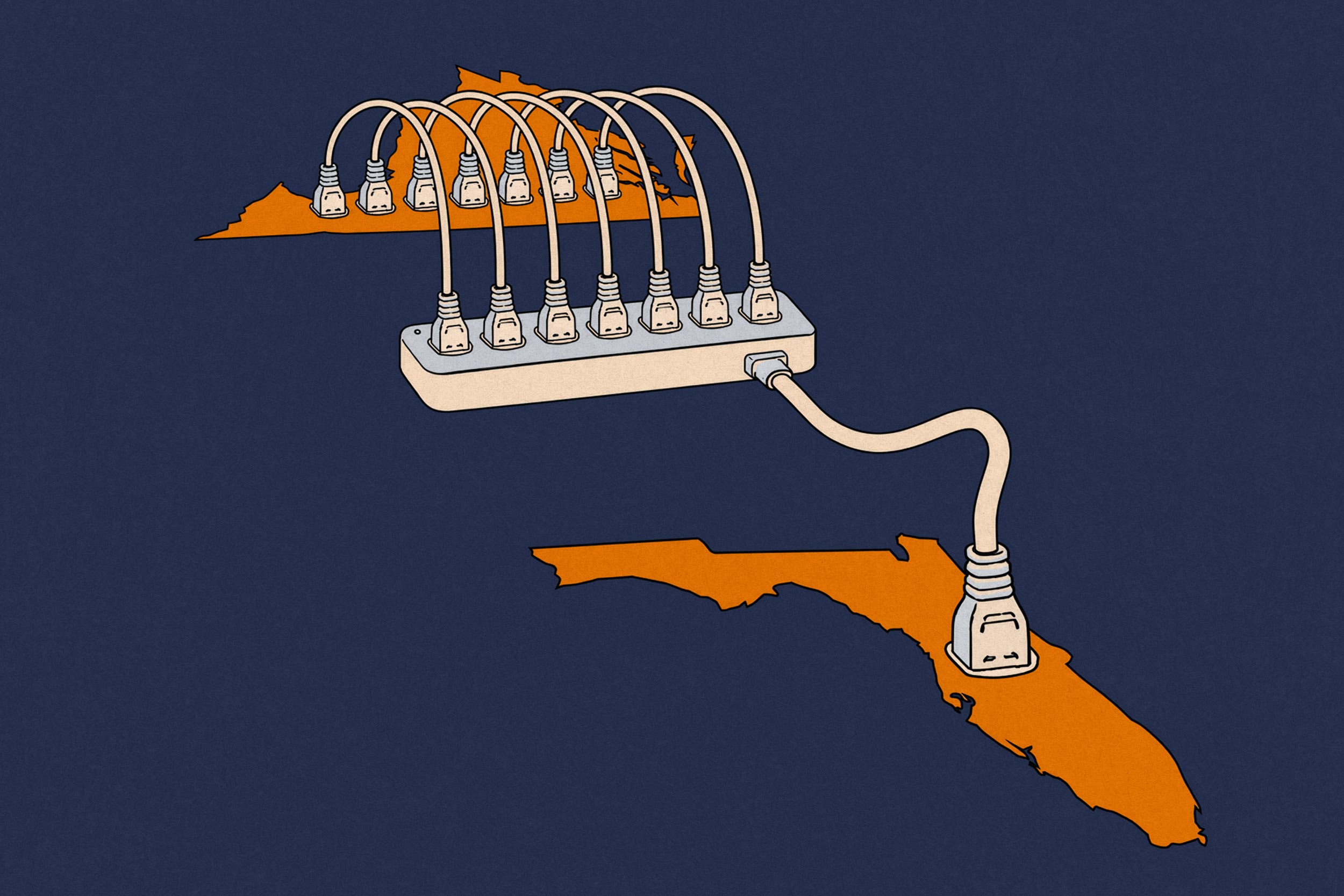
The energy landscape in the United States is poised for a transformation as NextEra Energy aims to acquire Dominion Energy for a staggering $66.8 billion. This substantial merger reflects a growing trend among power companies to expand their electricity generation capacities and access to the nation’s power grid, as noted by experts from the University of Virginia Darden School of Business.
Uncertainties linger regarding the potential impact of this acquisition on consumer bills, with experts acknowledging that the effects on residential and commercial customers remain to be seen.
NextEra Energy, known for its diverse energy production from solar, wind, natural gas, and nuclear sources, stands to gain significantly by acquiring Dominion Energy. Operating in Virginia, North Carolina, and South Carolina, Dominion’s assets would provide NextEra with enhanced generating capacity, a growing base of data center customers, and connections to a 13-state regional power grid.
According to Mike Lenox, interim dean at the Darden School of Business, “This will be the second utility that they’ve acquired, as they also own Florida Power and Light – that’s the Dominion equivalent for the state of Florida.” He further added that the acquisition presents a “market opportunity with the acquisition of large generation capacity in a region with growing demand.”
Currently, NextEra serves over 12 million customers in Florida, while Dominion caters to around 3.6 million customers across three states. The rising demand from Virginia’s burgeoning data center industry could be a significant driver behind NextEra’s interest in the acquisition.
NextEra has agreements with Alphabet, Google’s parent company, to reopen a nuclear facility in Iowa, while Dominion counts Alphabet, Amazon, and Microsoft among its data center clientele.
Mike Lenox remarked, “We are having a once-in-a-generation increase in demand for electricity, being driven by data center growth.” He highlighted the surge in electricity demand due to data centers, warning of potential price spikes if supply fails to keep pace.
Ramona Dagostino, an assistant professor at the Darden School, pointed out that the exact implications for Dominion’s current residential customers remain uncertain. She noted that the merger must undergo scrutiny by state and federal authorities, potentially requiring divestitures to maintain competition. Dagostino observed, “NextEra has already planned bill credits for consumers, which shows that affordability cannot be ignored even as the industry focuses more urgently on meeting demand.”
Dagostino also described the “trilemma” in power production and distribution, balancing availability, affordability, and acceptable production methods. Data centers have shifted the focus towards availability and affordability.
She emphasized that while debates over the merger are likely, NextEra is not the root cause of the challenges. The existing energy demands of data centers and the need for increased power generation in Virginia highlight ongoing issues. Dagostino stated, “We are the data center alley. We are already seeing the pressure on customer bills. We already have huge demand needs. We are in the middle of the energy trilemma already.”
Read More Here






![Robert Harmon Celebrates 99th Birthday at UVA’s Homecomings Weekend[embed]https://www.youtube.com/watch?v=c_VPFnE8x-w[/embed]](https://realnewsfast.com/wp-content/uploads/2026/10/Robert-Harmon-Celebrates-99th-Birthday-at-UVAs-Homecomings-Weekendembedhttpswwwyoutubecomwatchvc_VPFnE8x-wembed-300x200.jpg "Robert Harmon Celebrates 99th Birthday at UVA’s Homecomings Weekend[embed]https://www.youtube.com/watch?v=c_VPFnE8x-w[/embed]")
![Environmental Opera “Auksalaq” Opens UVA’s Arts on the Hill Series[embed]https://www.youtube.com/watch?v=PjYuP9wh3Hw[/embed]](https://realnewsfast.com/wp-content/uploads/2026/10/Environmental-Opera-Auksalaq-Opens-UVAs-Arts-on-the-Hill-SeriesembedhttpswwwyoutubecomwatchvPjYuP9wh3Hwembed-300x200.jpg "Environmental Opera “Auksalaq” Opens UVA’s Arts on the Hill Series[embed]https://www.youtube.com/watch?v=PjYuP9wh3Hw[/embed]")
![New documentary explores Elizabeth Holmes’ final days before prison[embed]https://www.youtube.com/watch?v=GGJSRFWALTI[/embed]](https://realnewsfast.com/wp-content/uploads/2026/10/New-documentary-explores-Elizabeth-Holmes-final-days-before-prisonembedhttpswwwyoutubecomwatchvGGJSRFWALTIembed-300x200.jpg "New documentary explores Elizabeth Holmes’ final days before prison[embed]https://www.youtube.com/watch?v=GGJSRFWALTI[/embed]")