University of Arizona Hosts Tribal Leaders Summit to Foster Collaboration and Understanding
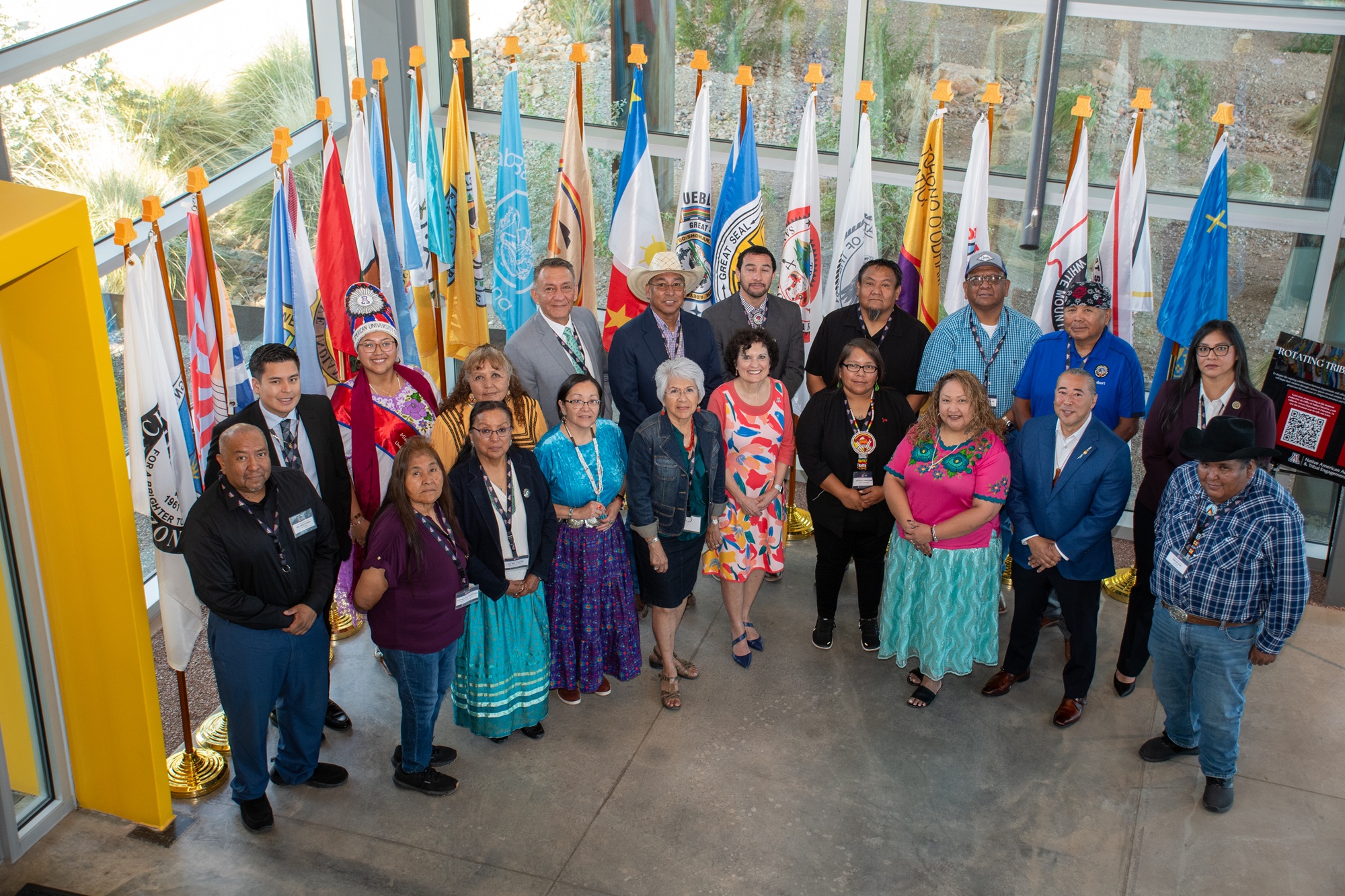
This week, tribal leaders from across Arizona gathered at the University of Arizona for the fifth annual Tribal Leaders Summit. The event, organized by the Office of Native American Initiatives and Tribal Engagement, aimed to explore ways the university can collaborate with Native communities while respecting their unique traditions and objectives.
“Tribal nations provide our university with so many opportunities to collaborate, but every tribe is different, with different traditions and goals,” commented Levi Esquerra, special advisor for Native American advancement and tribal engagement. Esquerra emphasized the importance of understanding these differences to effectively assist each tribe in achieving their objectives.
The summit commenced with a dinner by Diné chef Justin Pioche from Fruitland, New Mexico, a 2023 James Beard finalist and winner of the “Indigenous Inspiration” episode of the Food Network’s “Chopped.” Pioche remarked, “It is important to show how beautiful our Native foods can be, and to pass that knowledge on to future generations.”
Building Stronger Community Connections
The university’s administration, including Provost Patricia Prelock, engaged with tribal leaders to discuss enhancing services for Native communities. The discussions involved representatives from various university departments, such as the Student Success Center, Arizona Online, College of Engineering, and the Office of Responsible Artificial Intelligence.
Prelock stated, “The Tribal Leaders Summit was designed to build a cohesive and strong partnership between the University of Arizona and tribal leadership, which is so important to this institution.” This initiative aims to respect tribal sovereignty while fostering collaboration that benefits students, faculty, and the broader community.
A meet-and-greet session allowed tribal leaders and university officials to exchange insights on topics like artificial intelligence, lifelong learning, and the significance of artistic expression in Native communities. “Art is your identity, it’s who you are, but Native Americans don’t always recognize that,” said Amelia Flores, chairwoman of the Colorado River Indian Tribes, underscoring the need for mentorship in artistic development.
Elsewhere, representatives from the Student Success Center discussed support strategies with Navajo Nation leaders Richelle Montoya and Roy Tracy. “We want to support our whole undergraduate student body – as well as specific populations – by connecting them to resources, removing barriers and creating a streamlined pathway through college,” explained Christine Slavesen, chief retention officer.
Empowering Future Generations
The summit also featured insights from David Z. Bean, chairman of the Indian Gaming Association, who praised the collaborative spirit of the event. He emphasized the need for education in various professional fields to expand tribal organizations. “You are creating a pathway for our kids to higher education,” Bean stated, encouraging attendees to foster educational opportunities for future generations.
Joaquin Martinez, a College of Engineering alumnus, concluded the summit with a keynote speech. His book “The Super Generation” draws parallels between the journey of the monarch butterfly and the development of first-generation professionals. “There is something in their evolution called the super generation that is bigger, stronger and more well equipped for the journey that lays ahead,” Martinez shared, urging participants to share knowledge and experiences to pave the way for upcoming generations.
Read More Here






![Casey Scharf’s Journey: From UVA to Filming with Bill Murray[embed]https://www.youtube.com/watch?v=G-oCpAnX_ic[/embed]](https://realnewsfast.com/wp-content/uploads/2026/10/Casey-Scharfs-Journey-From-UVA-to-Filming-with-Bill-MurrayembedhttpswwwyoutubecomwatchvG-oCpAnX_icembed-300x200.jpg "Casey Scharf’s Journey: From UVA to Filming with Bill Murray[embed]https://www.youtube.com/watch?v=G-oCpAnX_ic[/embed]")