
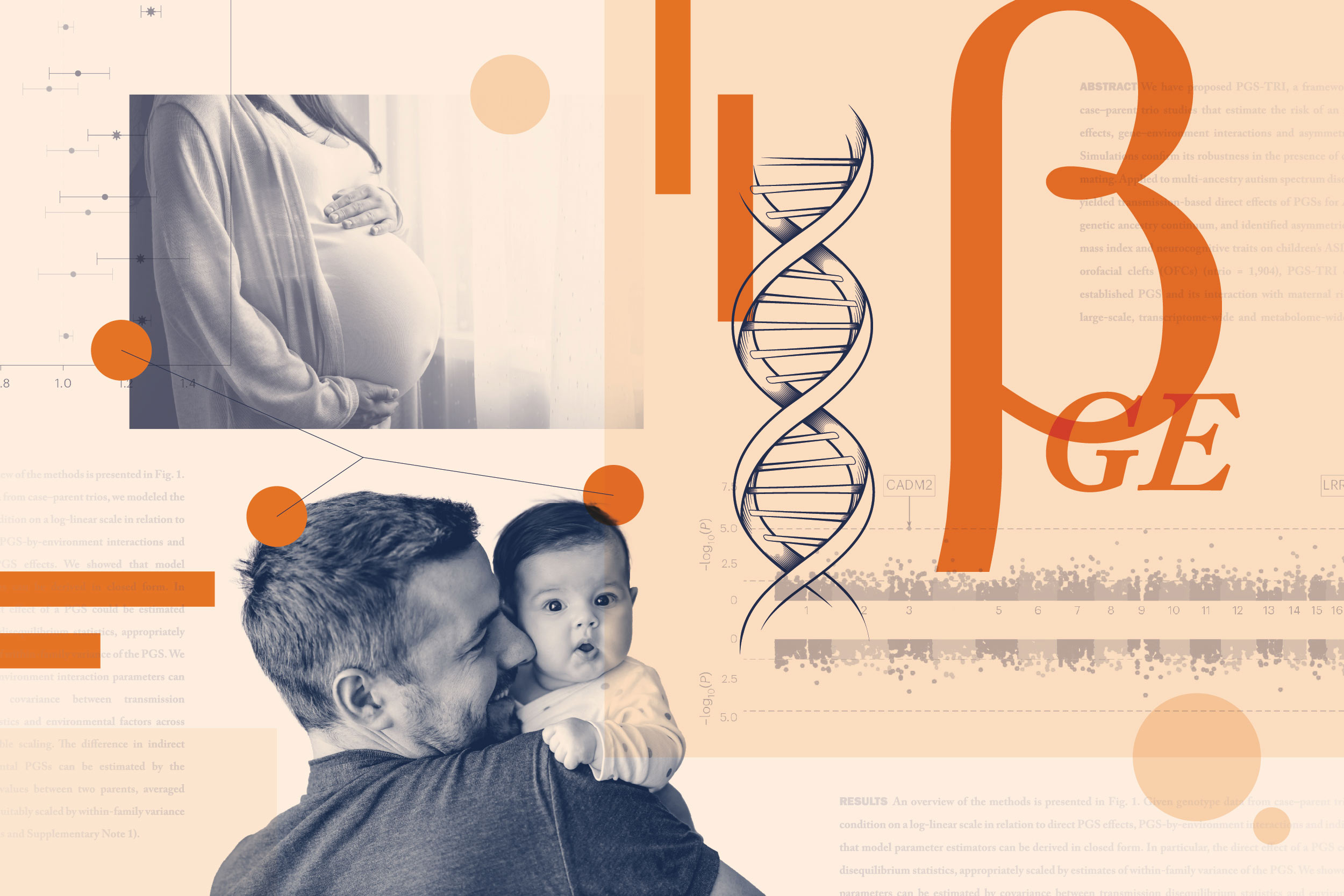
Groundbreaking research from the University of Virginia and Johns Hopkins University may offer new insights into how genetic disorders such as autism are inherited. The development of a novel tool, PGS-TRI, promises an enhanced understanding of the genetic transmission between parents and their children.
Assistant Professor Ziqiao Wang from the UVA School of Medicine, alongside Nilanjan Chatterjee and their team at Johns Hopkins, is pioneering statistical methods that explore the complex interactions between genetics and environmental factors. Their collaboration has resulted in the creation of PGS-TRI, a tool that could transform how genetic data is interpreted in familial studies.
In an interview with UVA Today, Wang elaborated on the implications of her team’s research, recently published in Nature Genetics, offering crucial insights for affected families.
Understanding Genetic Risk Factors
Wang explained the goal of her research: “We wanted to understand more precisely how genetic differences are related to a child’s risk of developing conditions like autism spectrum disorders.” The study highlights that many traits are influenced by numerous genetic variations, each contributing a minor effect. By employing a “polygenic score” to summarize these influences, the research aims to provide a more comprehensive analysis by also considering parental and environmental factors.
The introduction of the statistical framework PGS-TRI allows researchers to evaluate the distinct effects of maternal and paternal genetics on a child. This approach facilitates a deeper comprehension of how genetics and environment interplay in child development, potentially leading to more accurate interpretations of genetic data.
Implications for Families and Researchers
Wang emphasized the complexity of genetic and environmental interactions, stating: “The main message is that genes and environment act in very complicated ways to contribute to a condition.” By examining both children and their parents, the study aims to clarify these intricate relationships, minimizing the risk of misleading conclusions and enhancing the reliability of genetic research.
The team analyzed data from over 18,000 parent-child groups affected by autism, finding direct genetic effects linked to polygenic scores for autism and related neurocognitive traits. Additionally, evidence suggested that parental polygenic scores for traits like body mass index could indirectly influence autism risk in children.
Read More Here






![Robert Harmon Celebrates 99th Birthday at UVA’s Homecomings Weekend[embed]https://www.youtube.com/watch?v=c_VPFnE8x-w[/embed]](https://realnewsfast.com/wp-content/uploads/2026/10/Robert-Harmon-Celebrates-99th-Birthday-at-UVAs-Homecomings-Weekendembedhttpswwwyoutubecomwatchvc_VPFnE8x-wembed-300x200.jpg "Robert Harmon Celebrates 99th Birthday at UVA’s Homecomings Weekend[embed]https://www.youtube.com/watch?v=c_VPFnE8x-w[/embed]")
![Environmental Opera “Auksalaq” Opens UVA’s Arts on the Hill Series[embed]https://www.youtube.com/watch?v=PjYuP9wh3Hw[/embed]](https://realnewsfast.com/wp-content/uploads/2026/10/Environmental-Opera-Auksalaq-Opens-UVAs-Arts-on-the-Hill-SeriesembedhttpswwwyoutubecomwatchvPjYuP9wh3Hwembed-300x200.jpg "Environmental Opera “Auksalaq” Opens UVA’s Arts on the Hill Series[embed]https://www.youtube.com/watch?v=PjYuP9wh3Hw[/embed]")
![New documentary explores Elizabeth Holmes’ final days before prison[embed]https://www.youtube.com/watch?v=GGJSRFWALTI[/embed]](https://realnewsfast.com/wp-content/uploads/2026/10/New-documentary-explores-Elizabeth-Holmes-final-days-before-prisonembedhttpswwwyoutubecomwatchvGGJSRFWALTIembed-300x200.jpg "New documentary explores Elizabeth Holmes’ final days before prison[embed]https://www.youtube.com/watch?v=GGJSRFWALTI[/embed]")