Carnegie Mellon Student Innovates with Nanoparticles Using an iPhone
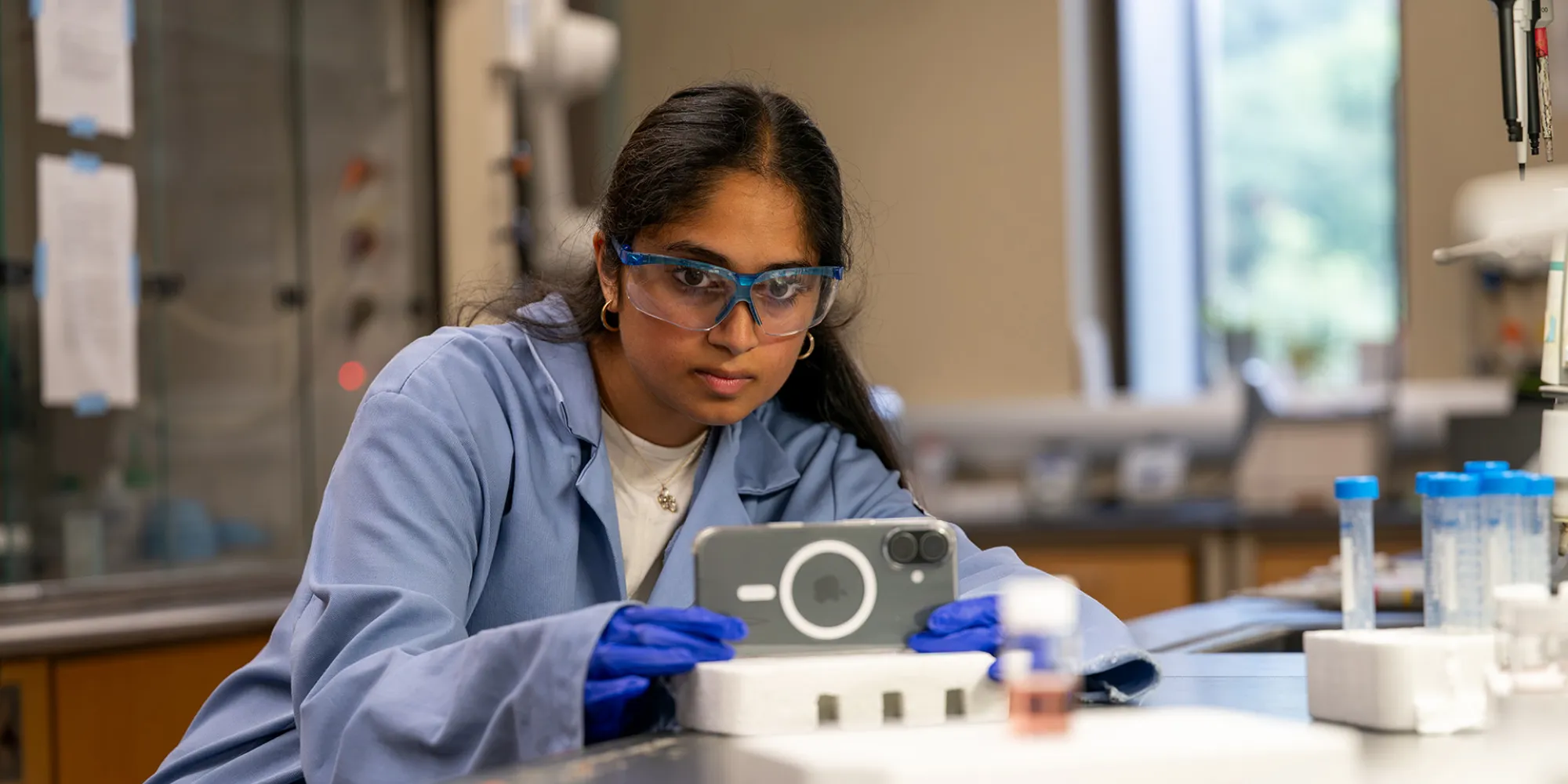
In an unexpected twist on smartphone usage, Nivedita Shyamsundar, a senior at Carnegie Mellon University, leveraged her iPhone not just for capturing memories, but for making a scientific breakthrough that could transform medical treatments.
Shyamsundar, part of the Department of Chemistry, is delving into the world of nanoparticles. Her research focuses on enhancing the delivery of medicines and vaccines within the human body, potentially leading to more effective cancer therapies and vaccines.
“I’m really excited to see where all this research goes,” Shyamsundar remarked.
Collaborating with Jill Millstone, Leo B. and Teresa Y. Wegemer Professor of Chemistry at the University of Pittsburgh, Shyamsundar and her team were able to observe the final stages of metal nanoparticle formation. The fast-paced nature of the formation process posed a challenge, as Shyamsundar noted, “The formation was happening way too fast to capture with typical lab technologies.”
Ingeniously, she recorded the reaction using her iPhone, analyzing the video frame by frame to monitor color changes in the solution, which correlated with nanoparticle formation. This led her to develop a program enabling researchers to track these formations using readily available cameras.
“We found out the formation mechanism wasn’t the classical one of metal atoms coming together one-by-one,” Shyamsundar explained. “It was actually clusters of metal atoms coalescing.”
This work, published in the American Chemical Society journal, Langmuir, highlights Shyamsundar’s contributions as a second author. Millstone praised her ingenuity, stating, “This innovation was possible not only because Niv is outstandingly smart and a hard worker, but because Niv is unusually talented in engaging available tools to solve longstanding problems in creative, robust ways that make real impact.”
Shyamsundar’s current focus is on improving cancer treatments through nanoparticles. Traditional chemotherapy often harms both cancerous and healthy cells, but nanoparticles could offer more targeted drug delivery. By designing nanoparticles that exploit the acidic environment of tumors, she aims to enhance chemotherapy effectiveness while minimizing side effects.
The nanoparticles she is developing utilize a ligand shell to control drug release. This shell acts like a protective pom-pom, releasing drugs only in the acidic environments typical of cancer cells. “Changing ligand shell behavior has the potential to make a big impact on how the drug releases,” Shyamsundar said, hoping her work will expand perspectives on nanoparticle-mediated cancer treatment.
Beyond cancer therapy, Shyamsundar’s research during an internship at Moderna explored lipid nanoparticles for vaccine delivery. She aspires to synthesize academic and industry insights to advance nanoparticle drug delivery systems.
Her efforts have earned her the Lois Jean Durham Scholarship for excellence in chemistry, with praise from Gizelle Sherwood, a teaching professor and director of undergraduate studies at CMU. Sherwood commended Shyamsundar’s “academic discipline, independent research, maturity, analytical precision and demonstrated growth as a scientific leader.”
“Nivedita stands apart because of her academic discipline, independent research, maturity, analytical precision and demonstrated growth as a scientific leader,” Sherwood stated. “She has positioned herself at the intersection of materials chemistry and biological application, and I look forward to seeing what she does.”
Upon graduating in spring 2027, Shyamsundar plans to pursue a Ph.D. in chemistry, continuing her exploration of nanoparticle applications in drug and vaccine delivery. “I want to keep exploring their potential and seeing what we can manipulate when it comes to their structure and chemistry,” Shyamsundar expressed. “I want to see how far we can go with these nanoparticles.”
Read More Here