
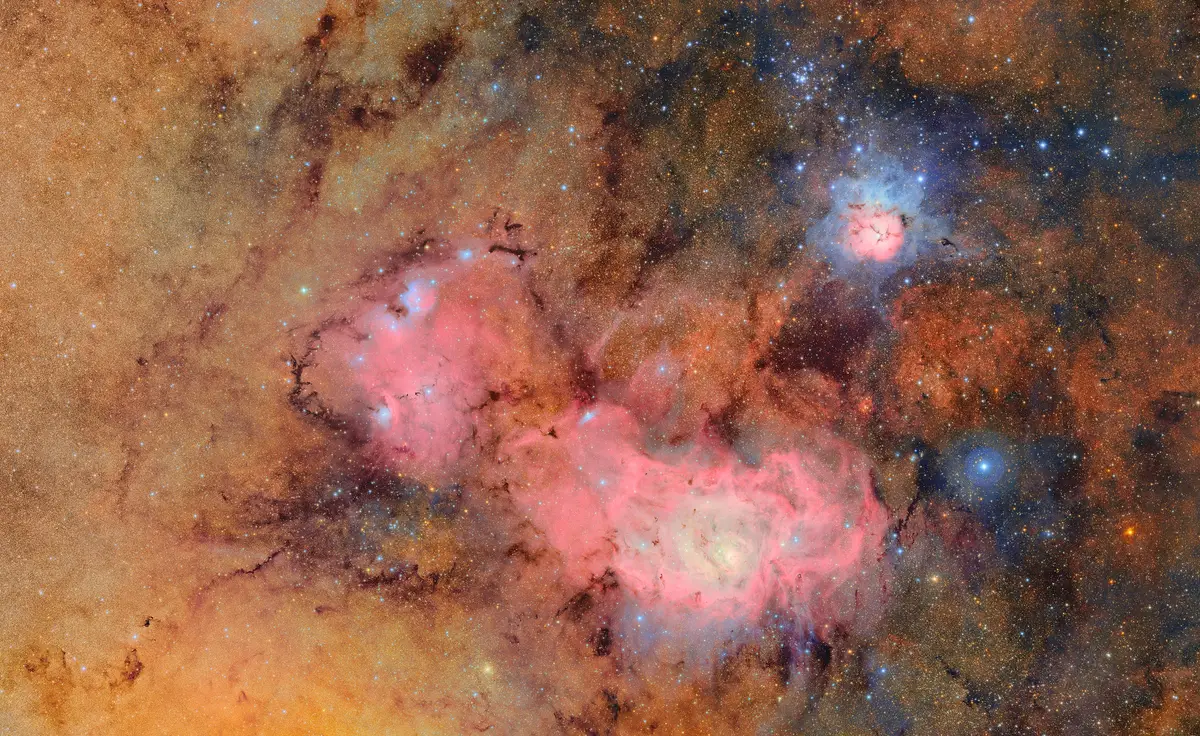
Carnegie Mellon University is set to spearhead a transformative shift in scientific exploration through its leadership in three projects funded by the U.S. Department of Energy’s (DOE) Genesis Mission. This initiative aims to revolutionize the way scientific breakthroughs are achieved, positioning CMU at the forefront of this national effort.
Beyond leading these projects, CMU will also contribute to five additional Genesis Mission projects headed by partner institutions, further extending the university’s influence in this expansive national endeavor. Over a dozen scholars and researchers from CMU are actively participating in the Genesis Mission, underscoring the university’s commitment to interdisciplinary research.
The projects highlight CMU’s prowess in AI, robotics, computing, and engineering, addressing national priorities such as securing vital mineral supply chains, advancing autonomous laboratories, and unveiling new insights into the universe. Collaborating with DOE national laboratories and top research universities, CMU aims to develop next-generation AI tools for scientific discovery.
In tandem with these initiatives, a new $20 million U.S. National Science Foundation investment in CMU’s AI Science Foundry will aid in building a national network of autonomous labs. Together, these efforts will establish a collaborative infrastructure to expedite scientific discoveries and reinforce American leadership.
“The Genesis Mission represents a bold new model for scientific discovery—one that brings together government, academia, industry and philanthropy—to tackle challenges no single institution can solve alone,” stated CMU President Farnam Jahanian. “Carnegie Mellon University is thrilled to join our collaborators in the national laboratory system and higher education to leverage AI-powered capabilities that will define the next era of discovery and strengthen our nation’s research enterprise for generations to come.”
The Genesis Mission, a landmark initiative led by the DOE, is crafting the world’s most potent integrated science discovery platform. It aims to accelerate breakthroughs in energy, scientific discovery, and national security by merging AI, supercomputing, quantum systems, and advanced scientific instruments.
The Phase I RFA awards focus on identifying promising pathways towards groundbreaking scientific capabilities and establishing a foundation for future investments. Project teams will design and demonstrate research workflows that integrate AI with scientific investigations, assessing whether these approaches can enhance discovery, predictive capabilities, experimentation, and generate new insights.
“Carnegie Mellon’s defining strength is bringing together expertise across AI, computing, engineering and the sciences to solve problems that no single discipline can address alone,” said Theresa Mayer, vice president for research. “These projects exemplify the collaborative, forward-looking research that drives scientific advancement while creating new capabilities that will benefit researchers and society for years to come.”
Connecting Autonomous Laboratories to Expedite Scientific Advancement
Lead by Herman Herman, director of Carnegie Mellon’s National Robotics Engineering Center, one project aims to develop AI-based tools that enable autonomous labs to function as a cohesive research ecosystem. In collaboration with Argonne National Laboratory and Lawrence Livermore National Laboratory, the project seeks to significantly reduce the time required for scientific investigations by allowing robot-driven labs to share capabilities and conduct complex experiments.
GEM-AI: Accelerating Critical Mineral Discovery
Another project, led by Artur Dubrawski, focuses on developing an AI framework to revolutionize the discovery of critical minerals. Partnering with Sandia National Laboratories and the Pittsburgh Supercomputing Center, the team will integrate diverse scientific data to efficiently identify promising mineral deposits, thereby strengthening domestic supply chains.
AI Infrastructure for Cosmic Discoveries
Under the leadership of Rachel Mandelbaum, CMU researchers will develop AI-enabled infrastructure to facilitate the seamless analysis of data from major astronomy experiments. In partnership with the University of Washington, this project aims to accelerate discoveries about dark matter, dark energy, and the universe’s evolution.
CMU researchers are also engaged in other Genesis Mission projects that span various fields of science and technology:
- Aviral Kumar will participate in a project led by Brookhaven National Laboratory to develop tools for hypothesis generation in scientific research.
- Graham Neubig will be involved in a project to connect AI models into a continuously improving system for discovery.
- Noa Marom will contribute to AI-powered discovery of quantum and optoelectronic materials led by Lawrence Berkeley National Laboratory.
- Manfred Paulini and Matteo Cremonesi will work on a project investigating foundation models across energy regimes.
- Chad Schafer and Mikael Kuusela will develop foundational AI tools to process astronomical data.
These awards underscore a significant investment in research poised to enhance scientific productivity, bolster U.S. innovation, and accelerate advancements in energy, manufacturing, and beyond.
Read More Here





Comments are closed.