
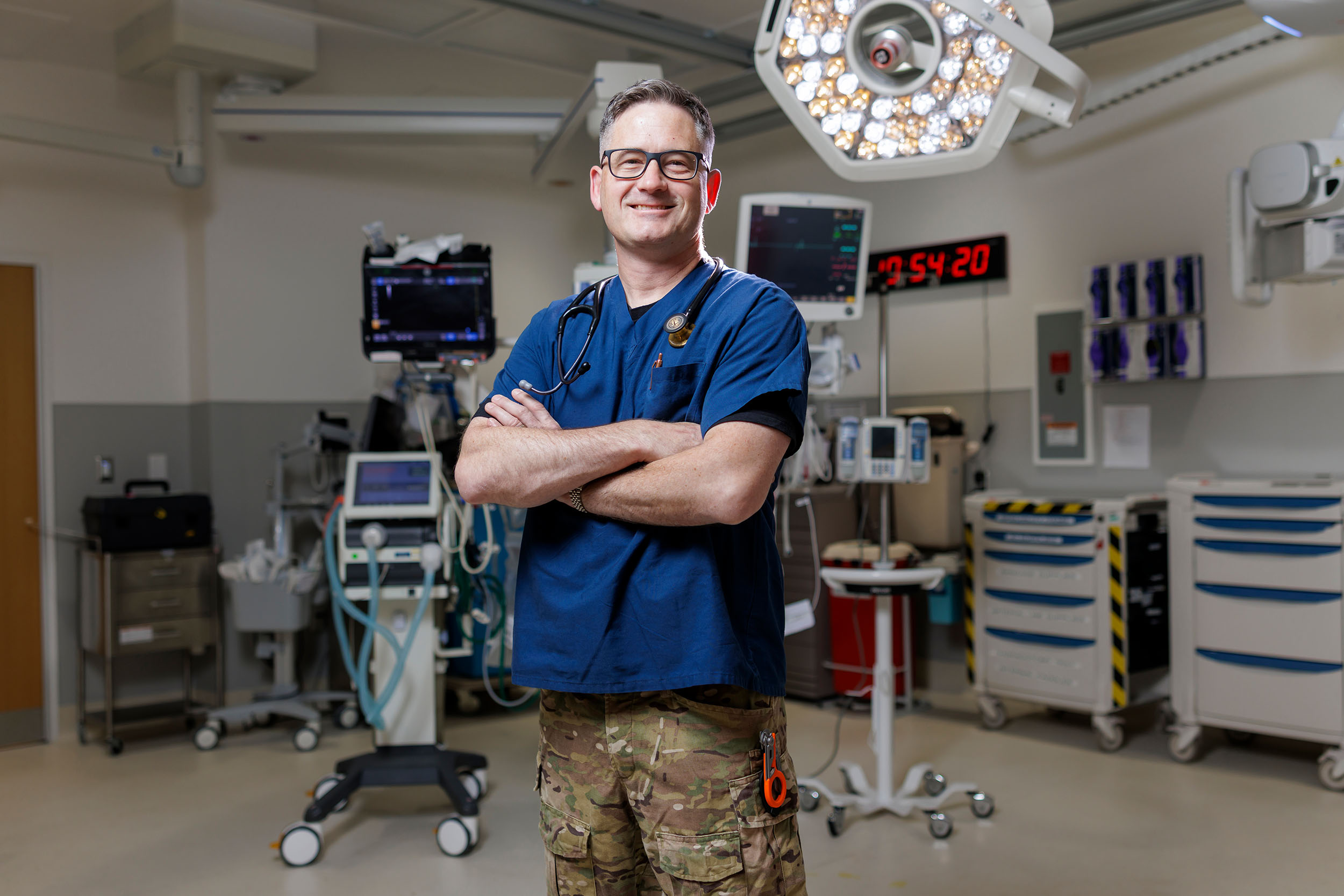
In the high-stakes world of space exploration, preparedness is key. As astronauts re-enter Earth’s atmosphere, the potential for disaster is vast. From heat-shield failures to unexpected medical emergencies, the risks are numerous. Dr. Brendan Byrne, an emergency physician and a captain in the U.S. Navy Reserve, is at the forefront, ready to respond to any crisis.
Byrne specializes in “pre-hospital medicine,” a field that requires medical expertise to be applied directly at the scene of an emergency. This time, the scene was the vast Pacific Ocean, where Byrne was stationed aboard the USS John P. Murtha, an amphibious transport dock ship off the coast of California.
Prepared for the Worst
As the Artemis II crew made contact after their harrowing journey through the atmosphere, Byrne was on high alert, listening intently for any signs of distress. The list of potential problems was extensive: capsule leaks, G-force injuries, and “space adaptation syndrome,” which could cause severe vertigo. More serious issues included the risk of a heat-shield malfunction leading to crew hyperthermia.
Fortunately, as the capsule’s parachutes deployed and the astronauts communicated calmly, the immediate danger receded. Yet, Byrne remained vigilant, ready to address any unforeseen complications.
An Unexpected Path
Byrne’s journey to this point was not straightforward. Originally from Detroit, he earned a degree in French from the University of Michigan and had plans to attend medical school in Belgium. However, the events of September 11, 2001, changed his course dramatically. “So, 9/11 happened,” Byrne recalled. “I went to a recruiter and said, ‘You know, it’s time to sign up.’”
The Navy supported Byrne through his medical education at Wayne State University School of Medicine. In return, he served over 15 years in various roles, including multiple deployments and extensive training, such as Navy dive school.
From Active Duty to Reserve
After concluding his active-duty career in 2016, Byrne transitioned to the Navy Reserve and settled in Charlottesville, practicing and teaching emergency medicine. “When we moved to Virginia, it was our 16th move as a family in 19 years of marriage,” he noted.
Deploying for Artemis II
As discussions began on how to staff the medical mission for Artemis II, Byrne proposed that reserve officers like himself could be ideal for the task. Consequently, he received orders to San Diego.
Once the rocket achieved orbit, Byrne’s responsibilities expanded beyond astronaut care to include the well-being of civilians on the ship. The challenging environment of a military vessel posed its own risks, resulting in injuries such as a broken hand and a near eye loss.
Read More Here






![Robert Harmon Celebrates 99th Birthday at UVA’s Homecomings Weekend[embed]https://www.youtube.com/watch?v=c_VPFnE8x-w[/embed]](https://realnewsfast.com/wp-content/uploads/2026/10/Robert-Harmon-Celebrates-99th-Birthday-at-UVAs-Homecomings-Weekendembedhttpswwwyoutubecomwatchvc_VPFnE8x-wembed-300x200.jpg "Robert Harmon Celebrates 99th Birthday at UVA’s Homecomings Weekend[embed]https://www.youtube.com/watch?v=c_VPFnE8x-w[/embed]")
![Environmental Opera “Auksalaq” Opens UVA’s Arts on the Hill Series[embed]https://www.youtube.com/watch?v=PjYuP9wh3Hw[/embed]](https://realnewsfast.com/wp-content/uploads/2026/10/Environmental-Opera-Auksalaq-Opens-UVAs-Arts-on-the-Hill-SeriesembedhttpswwwyoutubecomwatchvPjYuP9wh3Hwembed-300x200.jpg "Environmental Opera “Auksalaq” Opens UVA’s Arts on the Hill Series[embed]https://www.youtube.com/watch?v=PjYuP9wh3Hw[/embed]")
![New documentary explores Elizabeth Holmes’ final days before prison[embed]https://www.youtube.com/watch?v=GGJSRFWALTI[/embed]](https://realnewsfast.com/wp-content/uploads/2026/10/New-documentary-explores-Elizabeth-Holmes-final-days-before-prisonembedhttpswwwyoutubecomwatchvGGJSRFWALTIembed-300x200.jpg "New documentary explores Elizabeth Holmes’ final days before prison[embed]https://www.youtube.com/watch?v=GGJSRFWALTI[/embed]")