
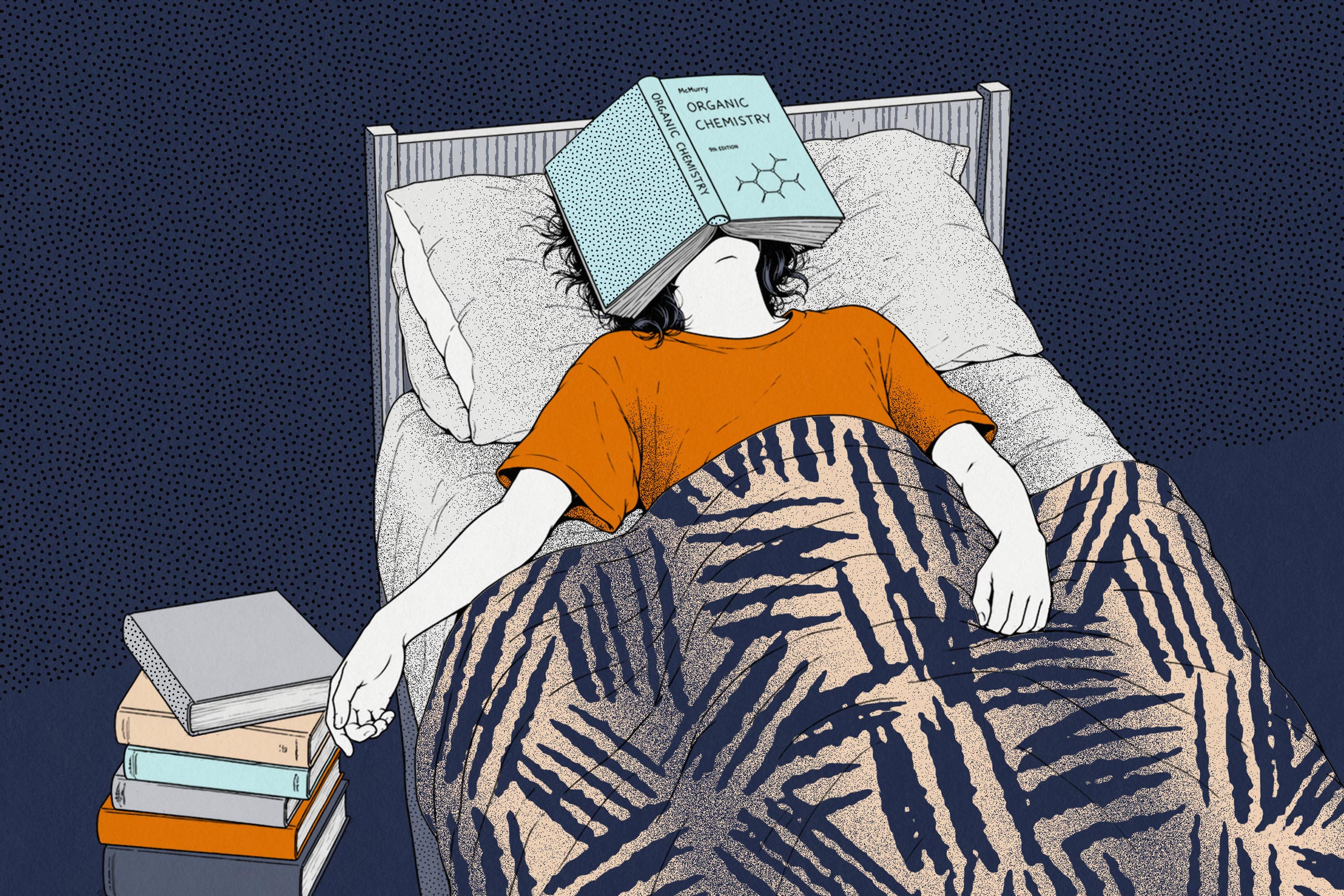
As final exams approach at the University of Virginia, students find themselves grappling with sleepless nights and increased caffeine consumption. However, Dr. Scott Schecter, a pulmonologist at UVA Health’s Sleep Disorders Center, warns that this approach may have unintended consequences.
“(Students are) going to try to fit in more studying than they have time in the day,” Schecter stated. “And I think for a lot of people, that kind of starts to cannibalize their sleep time.”
Sleep plays a critical role in memory consolidation. Dr. Schecter explained that while deep sleep helps integrate declarative memory, necessary for recalling facts, REM sleep aids in grasping complex concepts and linking ideas.
“Without good sleep, a lot of research has shown that people aren’t able to retain things to the best of their ability,” he emphasized.
Strategies for Better Sleep During Finals
Dr. Schecter offers several strategies to improve sleep quality during the exam period:
Implement a Caffeine Curfew
Students often rely on caffeine to sustain long study sessions, yet may not realize its lingering effects. Schecter notes caffeine’s half-life is five to six hours, suggesting that coffee consumed mid-afternoon could still influence the body well into the night.
“Hammering that late into the night can have some negative effects on sleep because it’s not going to be completely out of your body,” he mentioned.
To maintain a regular sleep routine, Schecter advises stopping caffeine intake by noon.
Avoid Studying in Bed
Although studying in bed might seem appealing, Schecter advises against it to prevent the brain from connecting the bed with wakefulness.
“You don’t want your brain to associate the bed as a place where you’re spending time awake,” he explained.
This practice can create a mental association that makes it difficult to fall asleep. Schecter suggests using the bed solely for sleep to foster better rest.
Refrain from Pulling All-Nighters
All-night study sessions might offer short-term recognition of exam material, but Schecter warns they impair the ability to apply knowledge effectively.
“The lack of sleep makes it so you don’t have all the pieces to put together,” he said.
While cramming can be beneficial in a pinch, consistent sleep is essential for retaining knowledge beyond the exam period.
Opt for Brief Naps Over Extended Ones
Short naps can be a remedy for insufficient nighttime sleep. Schecter recommends keeping naps to 20-30 minutes to feel rejuvenated without disrupting deeper sleep stages, which can cause grogginess.
Read More Here






![Robert Harmon Celebrates 99th Birthday at UVA’s Homecomings Weekend[embed]https://www.youtube.com/watch?v=c_VPFnE8x-w[/embed]](https://realnewsfast.com/wp-content/uploads/2026/10/Robert-Harmon-Celebrates-99th-Birthday-at-UVAs-Homecomings-Weekendembedhttpswwwyoutubecomwatchvc_VPFnE8x-wembed-300x200.jpg "Robert Harmon Celebrates 99th Birthday at UVA’s Homecomings Weekend[embed]https://www.youtube.com/watch?v=c_VPFnE8x-w[/embed]")
![Environmental Opera “Auksalaq” Opens UVA’s Arts on the Hill Series[embed]https://www.youtube.com/watch?v=PjYuP9wh3Hw[/embed]](https://realnewsfast.com/wp-content/uploads/2026/10/Environmental-Opera-Auksalaq-Opens-UVAs-Arts-on-the-Hill-SeriesembedhttpswwwyoutubecomwatchvPjYuP9wh3Hwembed-300x200.jpg "Environmental Opera “Auksalaq” Opens UVA’s Arts on the Hill Series[embed]https://www.youtube.com/watch?v=PjYuP9wh3Hw[/embed]")
![New documentary explores Elizabeth Holmes’ final days before prison[embed]https://www.youtube.com/watch?v=GGJSRFWALTI[/embed]](https://realnewsfast.com/wp-content/uploads/2026/10/New-documentary-explores-Elizabeth-Holmes-final-days-before-prisonembedhttpswwwyoutubecomwatchvGGJSRFWALTIembed-300x200.jpg "New documentary explores Elizabeth Holmes’ final days before prison[embed]https://www.youtube.com/watch?v=GGJSRFWALTI[/embed]")