
From Island Exploration to Nationwide Journey: A Cycling Adventure Bridging the Food Divide
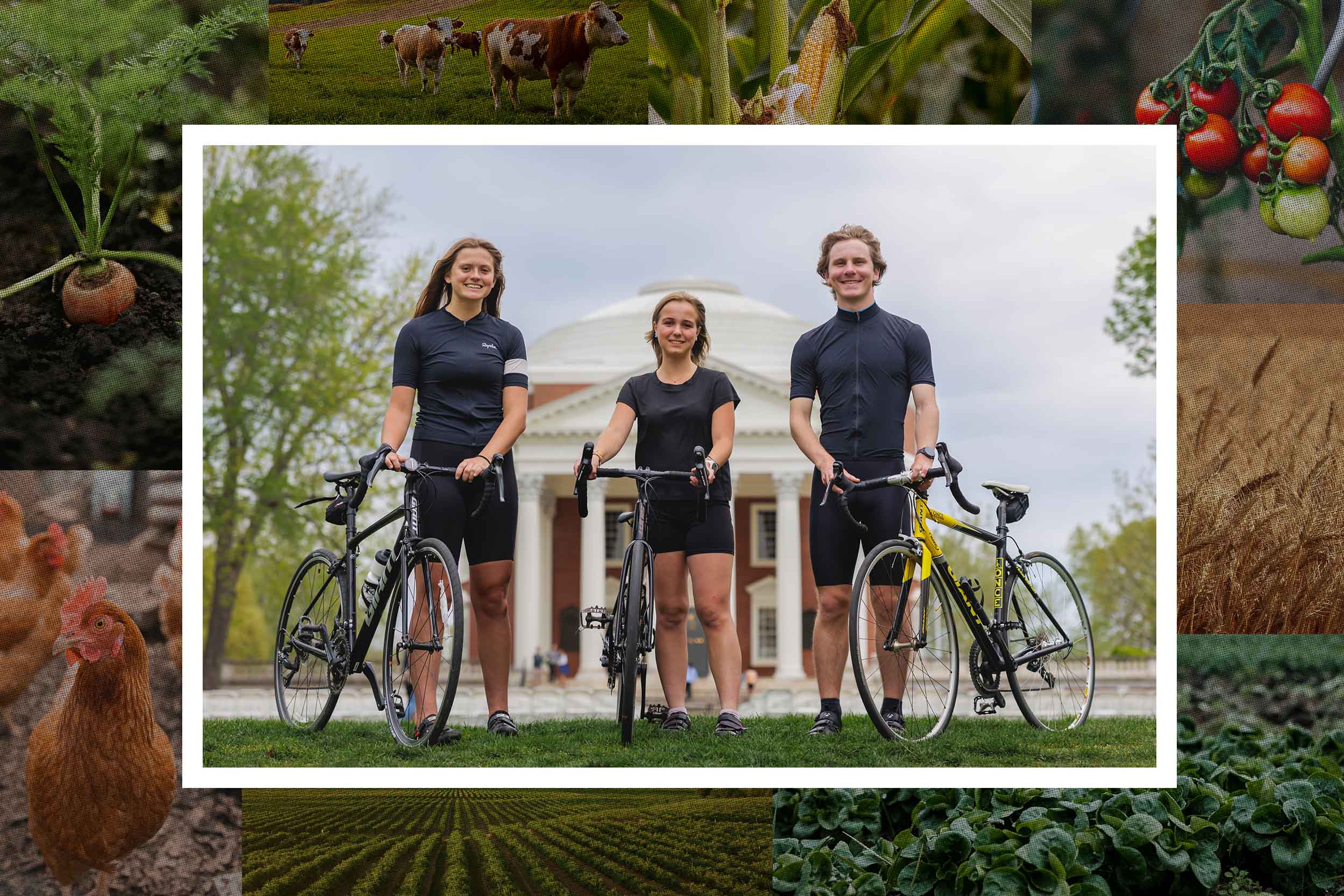
During a summer research project in the Bahamas, University of Virginia student Augusta Halle embarked on an unconventional exploration of Eleuthera by riding old beach cruisers. With limited space for supplies, she crafted a makeshift “Got Snacks?” sign to solicit food from locals.
“My friend and I, we love biking, and we love eating, so those were like our two loves combined,” said Halle, now in her second year at the McIntire School of Commerce. This journey revealed the deep connection between food and culture, as locals shared both commercial and native delicacies with the travelers.
“People welcomed us into their homes and wanted us to stay,” Halle remembered, highlighting how food served as a gateway to understanding broader cultural dimensions. Inspired by this experience, Halle decided to replicate her research in the United States on a grander scale.
Next month, Halle and a group of students, including two fellow University of Virginia attendees, will embark on a 3,500-mile cycling expedition from Seattle to Washington, D.C. Dubbed “Roots on the Road,” the journey aims to connect food consumers with producers, starting from farms and stretching across various food venues. More details can be found on their official website.
The mission of this project is to foster a dialogue about agriculture’s future and to narrow the gap between those who produce food and those who consume it. The cyclists will engage with farmers, camp on farms, and visit kitchens, truck stops, and farmers’ markets.
“We’re all connected to the food system in some capacity or another, whether we’re eating our breakfast or farming on the ground,” Halle explained. She emphasized the need to spark a national conversation that includes everyone involved in the food chain.
Halle pointed out that the disconnect between farmers and consumers has increased over time, leading to what she refers to as “agricultural illiteracy.” This disconnect is evident in statistics showing that 16.4 million Americans mistakenly believe chocolate milk comes from brown cows. (Fact check: true, according to a 2017 survey). “It’s strange to think there are so many people unaware of where their food comes from, and we are really trying to bridge that gap,” she added.
Read More Here

![Robert Harmon Celebrates 99th Birthday at UVA’s Homecomings Weekend[embed]https://www.youtube.com/watch?v=c_VPFnE8x-w[/embed]](https://realnewsfast.com/wp-content/uploads/2026/10/Robert-Harmon-Celebrates-99th-Birthday-at-UVAs-Homecomings-Weekendembedhttpswwwyoutubecomwatchvc_VPFnE8x-wembed-300x200.jpg "Robert Harmon Celebrates 99th Birthday at UVA’s Homecomings Weekend[embed]https://www.youtube.com/watch?v=c_VPFnE8x-w[/embed]")
![Environmental Opera “Auksalaq” Opens UVA’s Arts on the Hill Series[embed]https://www.youtube.com/watch?v=PjYuP9wh3Hw[/embed]](https://realnewsfast.com/wp-content/uploads/2026/10/Environmental-Opera-Auksalaq-Opens-UVAs-Arts-on-the-Hill-SeriesembedhttpswwwyoutubecomwatchvPjYuP9wh3Hwembed-300x200.jpg "Environmental Opera “Auksalaq” Opens UVA’s Arts on the Hill Series[embed]https://www.youtube.com/watch?v=PjYuP9wh3Hw[/embed]")
![New documentary explores Elizabeth Holmes’ final days before prison[embed]https://www.youtube.com/watch?v=GGJSRFWALTI[/embed]](https://realnewsfast.com/wp-content/uploads/2026/10/New-documentary-explores-Elizabeth-Holmes-final-days-before-prisonembedhttpswwwyoutubecomwatchvGGJSRFWALTIembed-300x200.jpg "New documentary explores Elizabeth Holmes’ final days before prison[embed]https://www.youtube.com/watch?v=GGJSRFWALTI[/embed]")