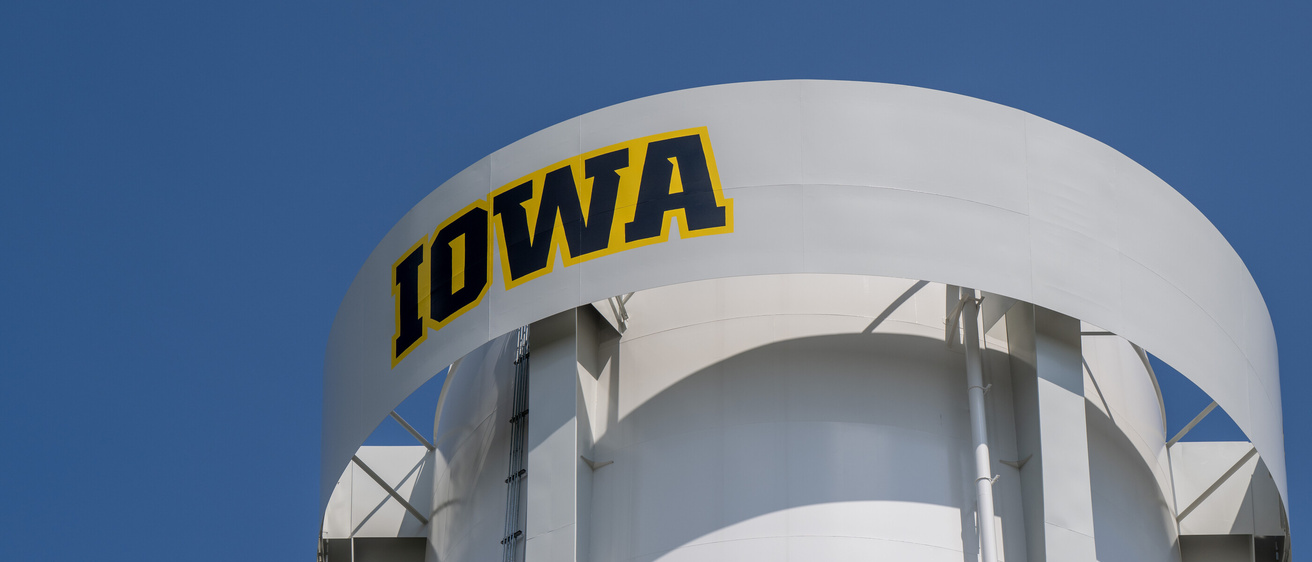
The University of Iowa has introduced a towering new addition to its campus skyline: a water tower standing at an impressive 138 feet. Positioned near Kinnick Stadium and the UI Health Care campus, this new standpipe is not just a visual landmark but a critical component of the university’s infrastructure.
While its imposing height grabs attention, the true significance of the standpipe is in its functional capabilities. As Ty Miller, a senior engineer with UI Utilities, explains, “The standpipe is an important investment in the campus water system. In addition to increasing storage capacity, it improves pressure stability, operational flexibility, fire-flow capacity, and the university’s ability to support future campus growth.”
Enhanced Storage and Capacity
The newly constructed standpipe replaces an older water tower that had been operational for decades. With a diameter of 60 feet, it holds approximately 2.876 million gallons of treated water, nearly quadrupling the capacity of its predecessor. Additionally, its integrated pumping station, which includes four pumps, can deliver up to 4,000 gallons of water per minute when necessary.
Designed to accommodate the university’s water needs at least until 2042, the standpipe ensures flexibility for future expansions, particularly for UI Health Care. This forward-thinking approach highlights the university’s commitment to sustainable growth and efficient resource management.
The Standpipe’s Operational Mechanics
Water from the university’s treatment plant is pumped into the standpipe at high pressure, where it is stored and then distributed according to demand. This system helps manage the daily fluctuations in water usage, storing excess water during low-demand periods and distributing it when demand rises. Gravity plays a crucial role, as the elevation of the stored water naturally generates the pressure needed for distribution across campus.
On average, during the 2025–26 academic year, the university consumed about 1.8 million gallons of water daily. The standpipe plays a vital role in meeting this demand, especially during peak periods like late August and early September when students return to campus.
The Importance of Height
The standpipe’s height is pivotal in maintaining water pressure throughout the campus. Standing 22 feet taller than the former tower, it boosts water pressure by around 10 psi, enhancing service across campus buildings and ensuring adequate flow for firefighting if needed.
Reliability and Future-Proof Design
Beyond mere storage, the standpipe offers enhanced operational flexibility for utility teams. It includes modern features for maintenance, disinfection, and inspection, ensuring the age and quality of water are managed effectively. The pumping station adds a layer of reliability, particularly during emergencies or high-demand periods.
These features collectively ensure consistent water service across the university’s facilities, including academic buildings, residence halls, research centers, athletics venues, and UI Health Care facilities. As Miller concludes, “The standpipe provides the capacity and flexibility needed to support an evolving and growing campus. It helps maintain a reliable water system and positions the university to meet future demand.”
Read More Here