
Preserving History: The Art of Masonry at the University of Virginia
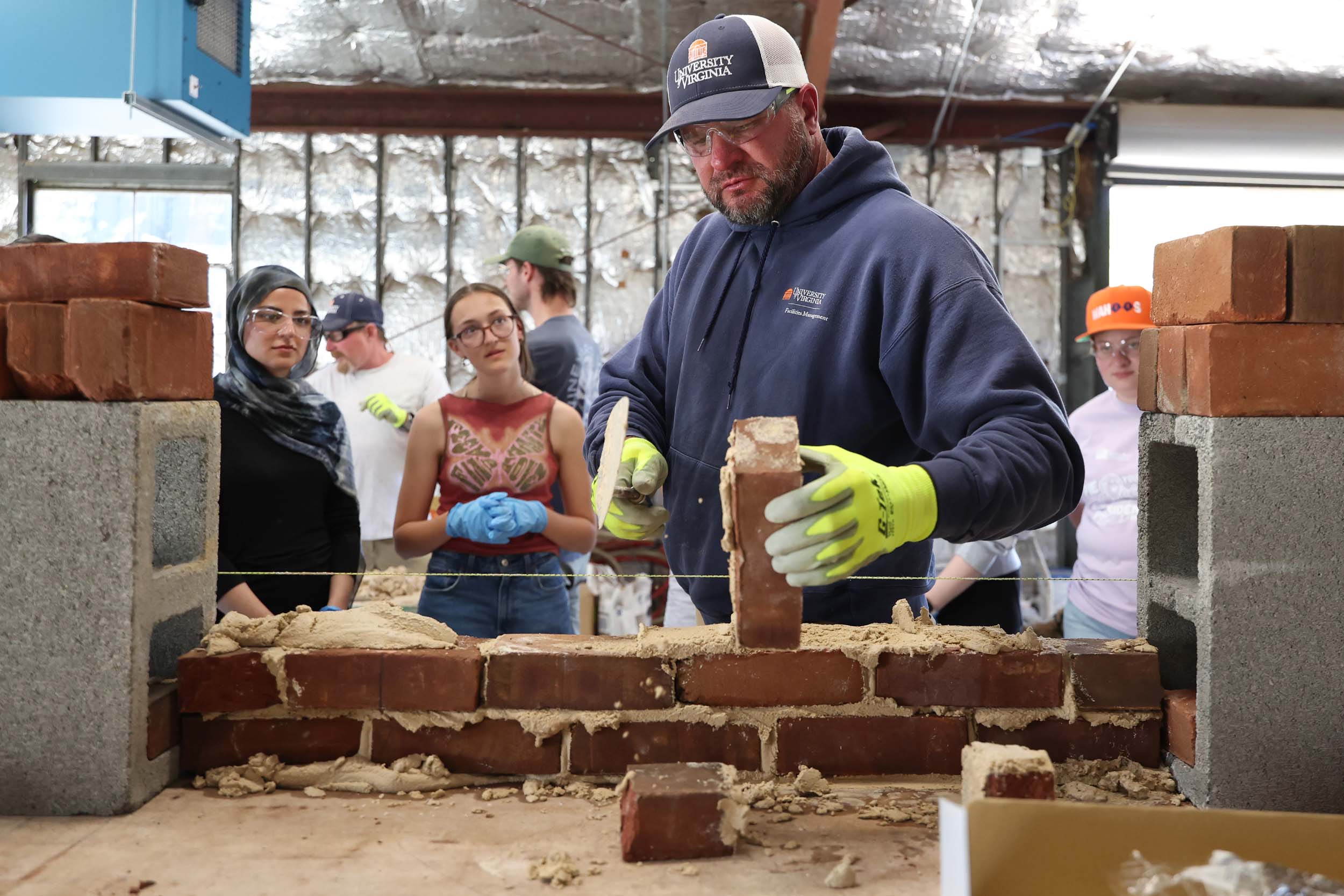
At the University of Virginia, the skilled hands of masons ensure that historical structures remain as timeless as the day they were built. Their meticulous work ensures that restorations are indistinguishable from the original architecture, maintaining the aesthetic integrity of the campus.
“The historic masons are working with different materials than the modern masons,” explained Wayne Mays, assistant director for trades at Facilities Management. “It’s period materials with these buildings. You want to work with a like-for-like material, such as lime mortars. You don’t use modern materials to repair historic fabric because it can actually cause more damage and harm to the building over time.”
The issue is vividly illustrated by the Tuscan columns on the Lawn, part of Thomas Jefferson’s original design. These columns were constructed with handmade brick cores and coated with a limestone render that allowed moisture to evaporate naturally.
Over time, as the University embraced modern building practices, these methods changed. Loose limestone render was repaired with Portland cement, which was then painted. Unfortunately, this modern material trapped moisture, leading to further deterioration. The trapped water would freeze in colder months, causing small cracks and subsequent issues.
Recognizing these challenges, UVA’s historic masons have returned to traditional methods. By replacing Portland cement with lime render, as they are currently doing on Pavilion II’s columns, they allow the historic structures to breathe once more, preserving their integrity for future generations.
Read More Here




![Robert Harmon Celebrates 99th Birthday at UVA’s Homecomings Weekend[embed]https://www.youtube.com/watch?v=c_VPFnE8x-w[/embed]](https://realnewsfast.com/wp-content/uploads/2026/10/Robert-Harmon-Celebrates-99th-Birthday-at-UVAs-Homecomings-Weekendembedhttpswwwyoutubecomwatchvc_VPFnE8x-wembed-300x200.jpg "Robert Harmon Celebrates 99th Birthday at UVA’s Homecomings Weekend[embed]https://www.youtube.com/watch?v=c_VPFnE8x-w[/embed]")
![Environmental Opera “Auksalaq” Opens UVA’s Arts on the Hill Series[embed]https://www.youtube.com/watch?v=PjYuP9wh3Hw[/embed]](https://realnewsfast.com/wp-content/uploads/2026/10/Environmental-Opera-Auksalaq-Opens-UVAs-Arts-on-the-Hill-SeriesembedhttpswwwyoutubecomwatchvPjYuP9wh3Hwembed-300x200.jpg "Environmental Opera “Auksalaq” Opens UVA’s Arts on the Hill Series[embed]https://www.youtube.com/watch?v=PjYuP9wh3Hw[/embed]")
![New documentary explores Elizabeth Holmes’ final days before prison[embed]https://www.youtube.com/watch?v=GGJSRFWALTI[/embed]](https://realnewsfast.com/wp-content/uploads/2026/10/New-documentary-explores-Elizabeth-Holmes-final-days-before-prisonembedhttpswwwyoutubecomwatchvGGJSRFWALTIembed-300x200.jpg "New documentary explores Elizabeth Holmes’ final days before prison[embed]https://www.youtube.com/watch?v=GGJSRFWALTI[/embed]")