
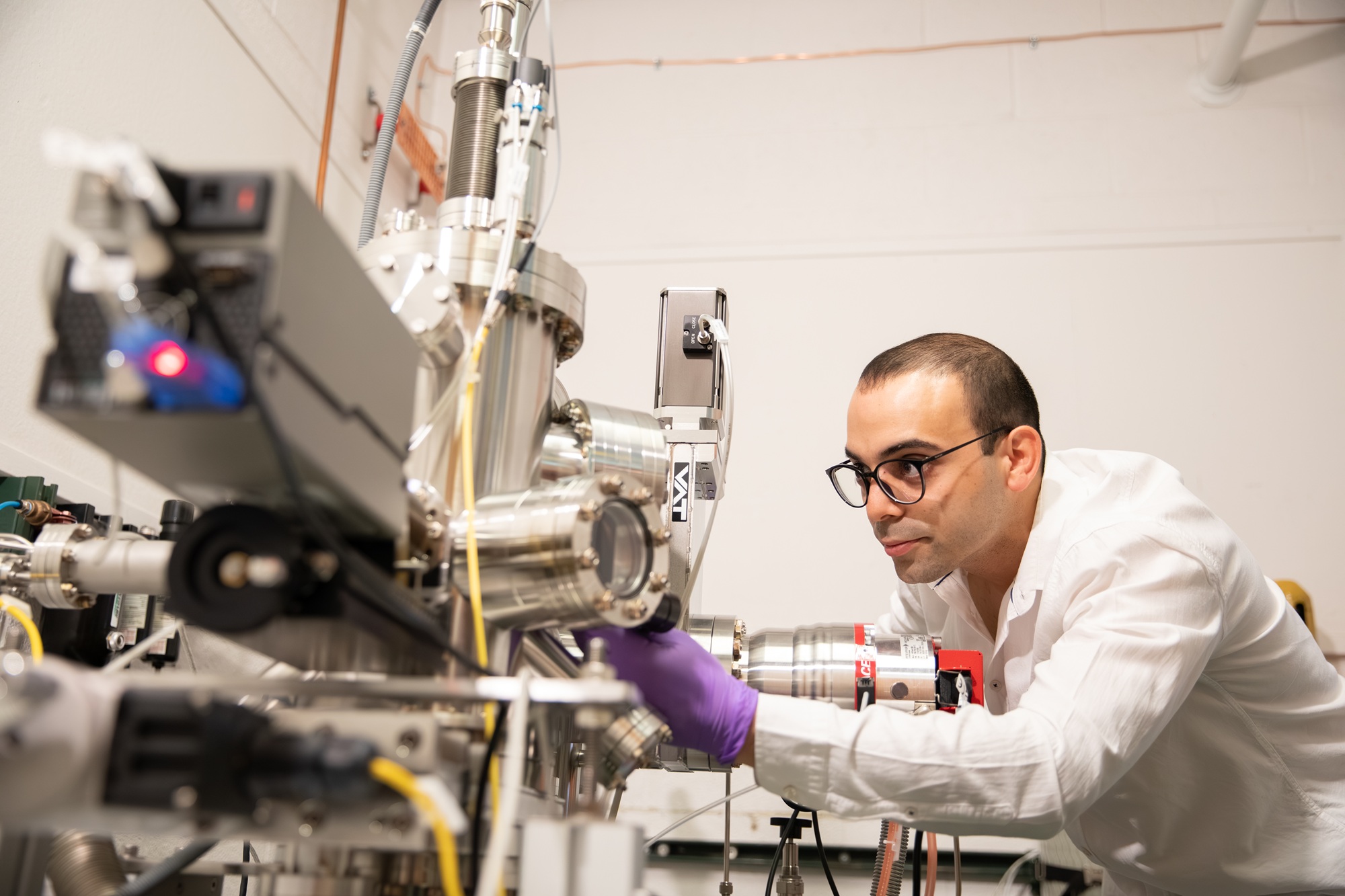
In a breakthrough that could pave the way for advancements in fusion energy and space exploration, University of Arizona researchers have found a new use for graphene nanoribbons (GNRs). These nanoscale materials, known for their resilience, could become integral to technologies operating in extreme environments, such as fusion reactors and deep space missions.
Revolutionizing Radiation Sensing
The study, published in the journal ACS Applied Materials & Interfaces, involved embedding GNRs into semiconductor devices and exposing them to gamma radiation. The results revealed that while the GNRs’ atomic structure remained unchanged, their electrical performance saw significant alterations. “The devices survive the exposure and still respond, but their electrical performance changes dramatically,” says Zafer Mutlu, the principal investigator and assistant professor at the College of Engineering, University of Arizona. This unique reaction makes them ideal candidates for radiation sensors in fusion reactors and space environments.
Fusion energy, often hailed as a potential clean and limitless power source, involves significant engineering challenges, particularly in monitoring the reactor’s first wall, which is prone to radiation damage. Existing silicon-based sensors are inadequate for direct monitoring within these intense environments. The introduction of GNR-based sensors could revolutionize this process, allowing for closer monitoring and potentially reducing costly shutdowns for inspections.
Quantum Effects and Real-Time Monitoring
The GNRs operate under the principles of quantum physics, differing from classical physics in their behavior. When exposed to gamma radiation, the air around these nanoribbons generates reactive molecules that modify their edges slightly, leading to a significant impact on their electrical signals due to quantum effects. This phenomenon, known as Anderson localization, traps electrons and reduces current, marking radiation exposure. Mutlu highlights the potential for “real-time monitoring” in these applications.
The capability of GNRs to provide precise data could transform maintenance planning for reactors and space systems. They could offer early detection of radiation-induced wear in satellites and space probes, preventing failures and extending the operational lifespan of these technologies.
Future Directions and Customization
Looking ahead, Mutlu and his team plan to test GNR devices under varying radiation doses and explore different sizes of nanoribbons. The research promises a high degree of customization, enabling the design of materials “atom by atom, molecule by molecule,” according to Mutlu. This adaptability is crucial for developing radiation-resistant electronics and sensors that must endure prolonged exposure in space.
The study’s co-first authors include Kentaro Yumigeta and Muhammed Yusufoglu, with contributions from other University of Arizona experts in materials science, engineering, and chemistry. The research was supported by the Semiconductor Research Corporation and the National Science Foundation, furthering efforts to bring fusion energy to the grid and advance space technology.
Read More Here









Comments are closed.