
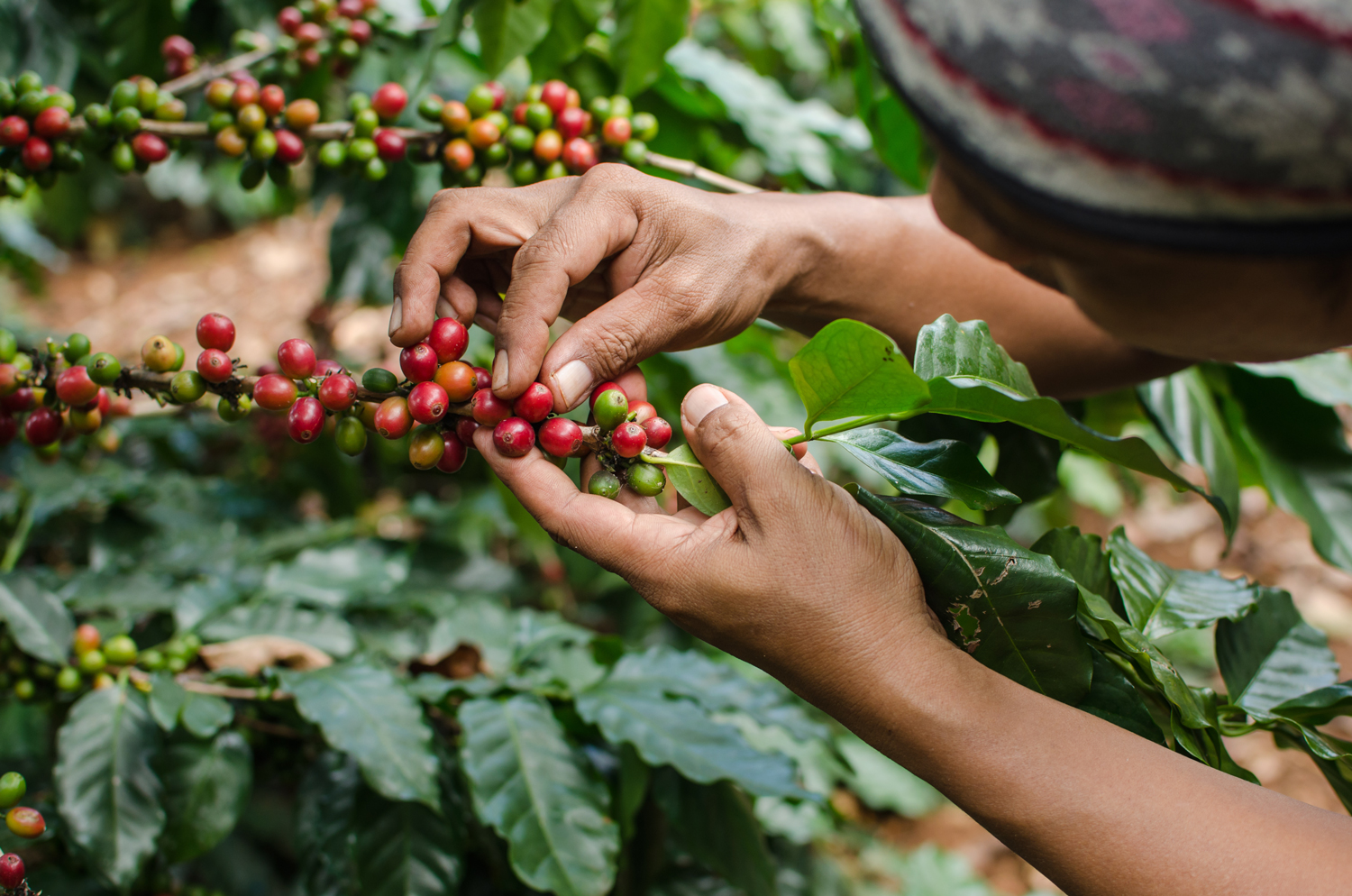
Ever thought your caffeine intake was impressive? Meet the coffee berry borer, a beetle capable of consuming caffeine at levels that would be lethal to humans. While an average person might sip on three cups of coffee daily, these tiny insects can handle caffeine amounts 100 times greater than a human relative to their body weight.
Impressive Caffeine Tolerance
These beetles, measuring just 1 to 2 millimeters in length, have a unique ability to bore into coffee beans, consuming them from the inside. According to NAU Ph.D. student Lynn Bonomo, “For an average human, it’s considered too much to have more than 400 milligrams of caffeine a day—that’s about four cups of coffee or two of those Celsius energy drinks. If we had the same tolerance as a coffee berry borer, we could have 400 cups of coffee a day.”
A Global Threat to Coffee Crops
Originally native to central and western Africa, these beetles have spread to coffee-growing regions worldwide, leading to an estimated 30% loss in crops and financial damages exceeding $500 million. The beetles are particularly harmful to arabica coffee plants, which account for 60-70% of global coffee consumption.
Researching Solutions
Bonomo, working in Javier Ceja-Navarro‘s lab at NAU’s Center for Ecosystem Science and Society, is exploring the coffee berry borer’s gut microbiome to potentially reduce its caffeine tolerance. “We know it’s able to withstand these toxic levels of caffeine because its gut microbiome can break it down really effectively,” Bonomo explained. “So we’re looking at using biological controls to target the gut microbiome in hopes that it changes their ability to break down caffeine.”
Challenges in Pest Management
Conventional pest management strategies have proven ineffective against these beetles. Farmers have attempted various methods, including burning affected plants, using parasitoid wasps, and setting up insect traps, but these efforts have limited success. Integrated pest management systems offer a better solution, but they require significant resources and expertise.
An Inside-Out Approach
Bonomo’s research involves feeding the beetles custom diets to study their caffeine tolerance. Through genomic sequencing, she aims to identify changes in the beetles’ microbiota that might allow for biological controls to reduce their caffeine tolerance. “That means they’re no longer able to consume the levels of caffeine needed to get them inside the bean,” Bonomo noted, “which means they’d stay on the outside of the plant and be exposed to other pesticide controls that work.”
Future Directions
If successful, Bonomo plans to develop an easy-to-apply solution for farmers, potentially in the form of a fertilizer powder or a spray. Her work might also have broader implications, offering insights into managing other invasive pests and even contributing to human health by targeting harmful gut bacteria more effectively than current antibiotics.
For more information, contact Jill Kimball at NAU Communications via jill.kimball@nau.edu.
Read More Here







Comments are closed.