
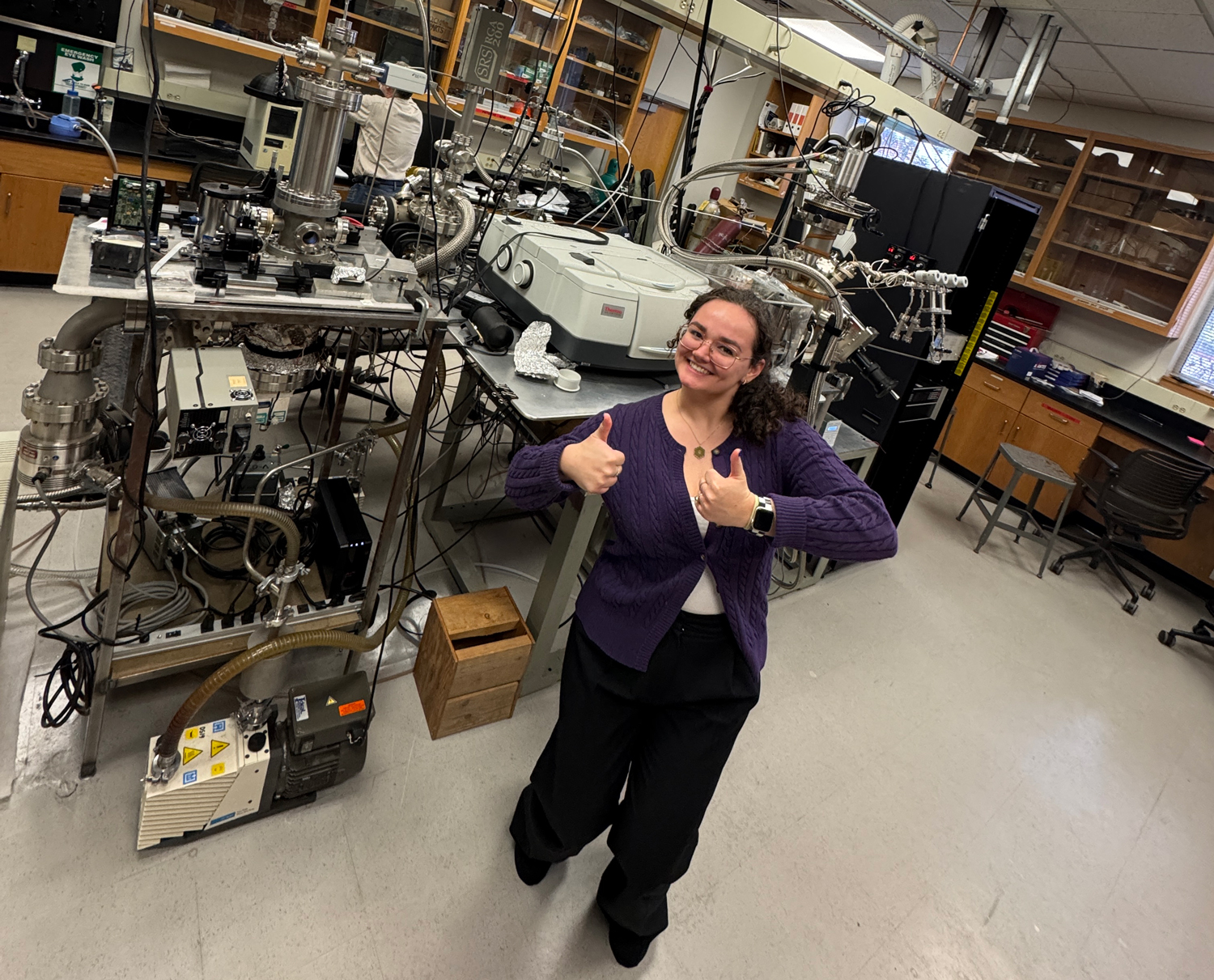
In the vast stretches beyond our familiar asteroid belt, the outer solar system presents a frigid landscape, teeming with icy celestial bodies. While we know these regions are predominantly cold, the intricate behavior of the ice formations remains a mystery. Addressing this enigma, Ph.D. student Ivy Knudsen from Northern Arizona University (NAU) is utilizing computer models to shed light on the icy dynamics of Pluto, thanks to funding from the prestigious National Science Foundation’s Graduate Research Fellowship Program (GRFP).
Knudsen’s research over the next three years will delve into how various chemical compounds interact within Pluto’s ice, offering insights into the dwarf planet’s formation and the surface pockmarks that have intrigued scientists since the New Horizons mission in 2015. By making her computer models publicly accessible, she aims to propel advancements not only in space sciences but also in terrestrial applications.
“I’m motivated by those big questions: How did the solar system form? How did things get here?” Knudsen expressed. Her ambition extends beyond astronomy, as her findings could impact fluid dynamics studies on Earth, potentially influencing fields like aerospace, geology, and marine biology.
Participating in the GRFP alongside four other NAU students, Knudsen’s journey to this project began with a foundation in astrophysical and planetary sciences from the University of Colorado Boulder. Her interest in the outer solar system was piqued during her collaboration with planetary scientist Kelsi Singer at the Southwest Research Institute, where she explored asteroids, comets, and other small celestial bodies.
Pluto’s surface, predominantly composed of methane, nitrogen, and carbon monoxide ices, presents unique challenges due to its extreme temperature of -387 degrees Fahrenheit. As Knudsen explains, replicating such conditions on Earth is formidable, requiring sophisticated equipment to even approximate the icy cold of Pluto.
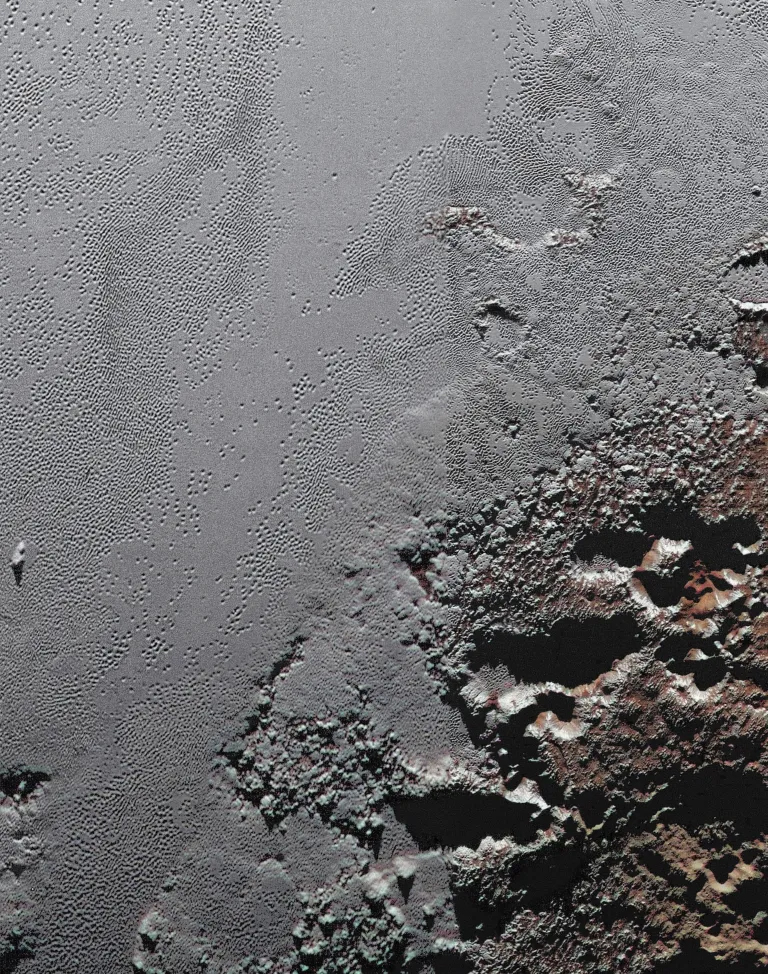
However, through digital simulations, Knudsen can explore scenarios previously unimaginable. “On a computer, you can model anything you want,” she said, highlighting the potential to predict the interactions of different ices beneath Pluto’s surface.
Knudsen’s research is timely as NASA’s exploratory missions set their sights beyond the inner solar system. “We’re heading that way soon,” she stated, eagerly anticipating the chance to test her predictions as space missions venture further into uncharted territories.
Her choice of NAU for graduate studies was influenced by the inspiring work of her adviser, research professor Will Grundy, and the camaraderie with fellow students. Driven by curiosity, Knudsen relishes the opportunity to tackle unknowns in her field, stating, “I love doing this kind of work—the work of, ‘We don’t know anything about this yet; let’s work on it for a few years and see if we can find out more.’”
For more on GRFP research at NAU, read about recent graduate Henry Garland here, and reach out to academic success coordinator Lillie S. Gordon at Lillie.Gordon@nau.edu for information on applying for the GRFP and other fellowships.
Read More Here







Comments are closed.