The Lesser-Known History of Independence Hall: A Story of Preservation
Whitney Martinko, PhD, is an associate professor of History and the director of the Albert Lepage Center for History in the Public Interest at Villanova University.
Independence Hall, a landmark in Philadelphia, is synonymous with pivotal moments in American history. Known as the birthplace of the United States, it hosted the formation of the Continental Army, the adoption of the Declaration of Independence, and the ratification of the U.S. Constitution. Its significance was eloquently captured by President Abraham Lincoln, who referred to it as the origin of “the institutions under which we live” (source).
The forthcoming semiquincentennial celebrations, known as America250, will bring renewed attention to this historic site. The event will see house lawmakers and mayors from across the nation gather at Independence Hall, while thousands of visitors are expected to appreciate its role in the enduring promise of “Life, Liberty and the pursuit of Happiness.”
Despite its prominent place in American heritage, the story of the building’s survival is less well-known. Whitney Martinko, PhD, from Villanova University, highlights that the “cradle of American democracy” faced significant threats in its early years. The challenges centered around ownership and urban development pressures.
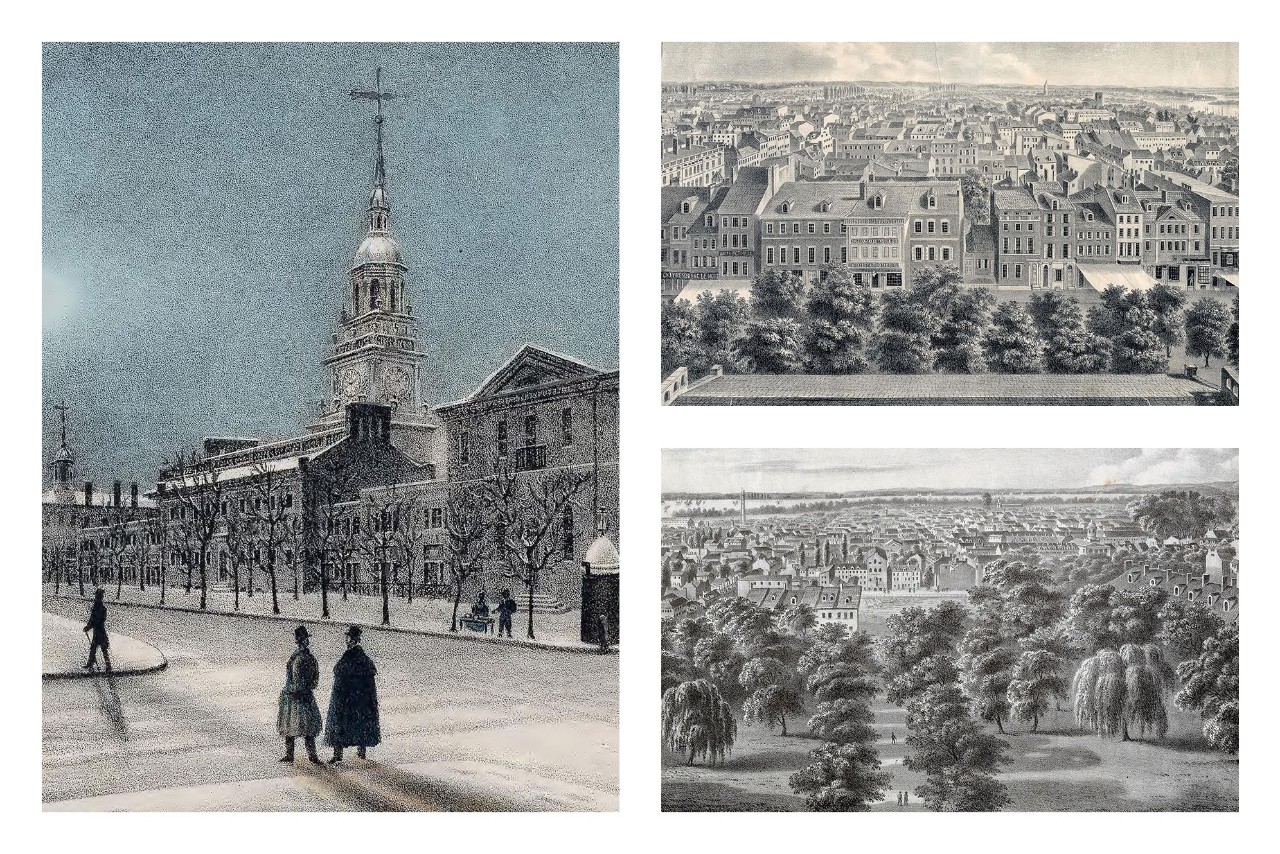
Left: A lithographic print of the Old State House (Independence Hall) by John C. Wild (1838, reissued by John T. Bowen in 1848). Top Right and Bottom Right: Companion 1838 prints showing panoramic views of Philadelphia from the Old State House’s steeple, looking north and south, respectively. (Images courtesy of the U.S. Library of Congress)
During the early 1800s, the former Pennsylvania statehouse faced the prospect of being sold to fund new government buildings following the capital’s move to Harrisburg in 1799. The surrounding area, which became a bustling commercial hub, was a prime target for developers.
As Martinko recounts, “Today’s Independence Mall was built up entirely” by the 19th century, transforming into a center for commerce. Yet, the potential loss of such a historic site rallied Philadelphians and city leaders to preserve it as both a civic and symbolic space.
The push to save Independence Hall culminated in 1818 when the City of Philadelphia purchased it for $70,000 (approximately $1.85 million today). This agreement ensured the site’s preservation but also led to the eventual demolition of its 19th-century surroundings to create Independence Mall, an effort led by city planners like Ed Bacon.
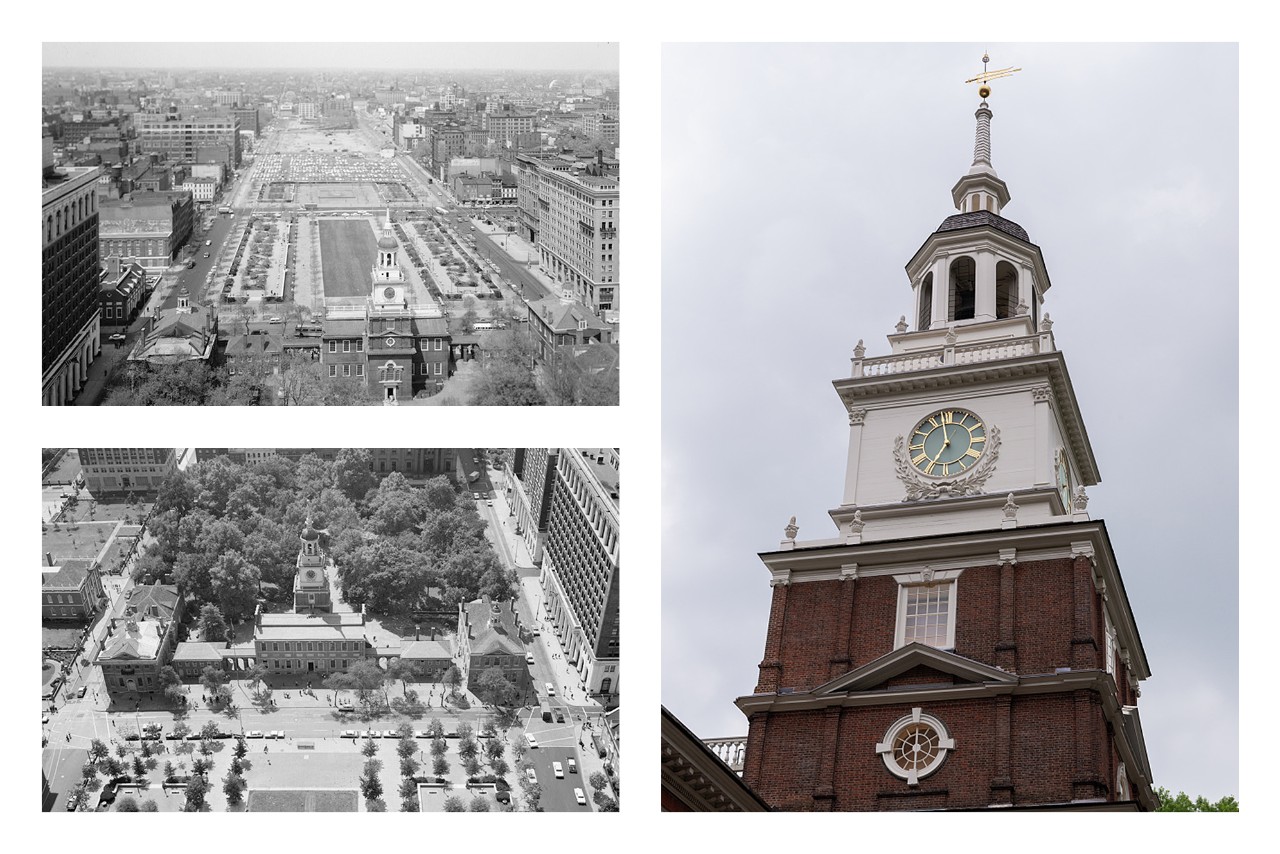
Top Left and Bottom Left: Historic American Building Survey photographs of Independence Hall—looking north and south, respectively—following the creation of Independence Mall. Right: A photograph of Independence Hall’s steeple by Carol M. Highsmith (2013). (Images courtesy of the U.S. Library of Congress)
Martinko emphasizes that the story of Independence Hall underscores ongoing debates about preservation and progress. “Even though it seems absurd to us now, we’re still seeing debates over the line between redevelopment and connection with the past,” she notes, highlighting the evolving nature of public memory and the complex decisions in preserving historical sites for future generations.
Read More Here