Northern Arizona University’s College of Health and Human Services has introduced two innovative programs focused on training healthcare professionals in the application of AI technologies within public and clinical health settings.
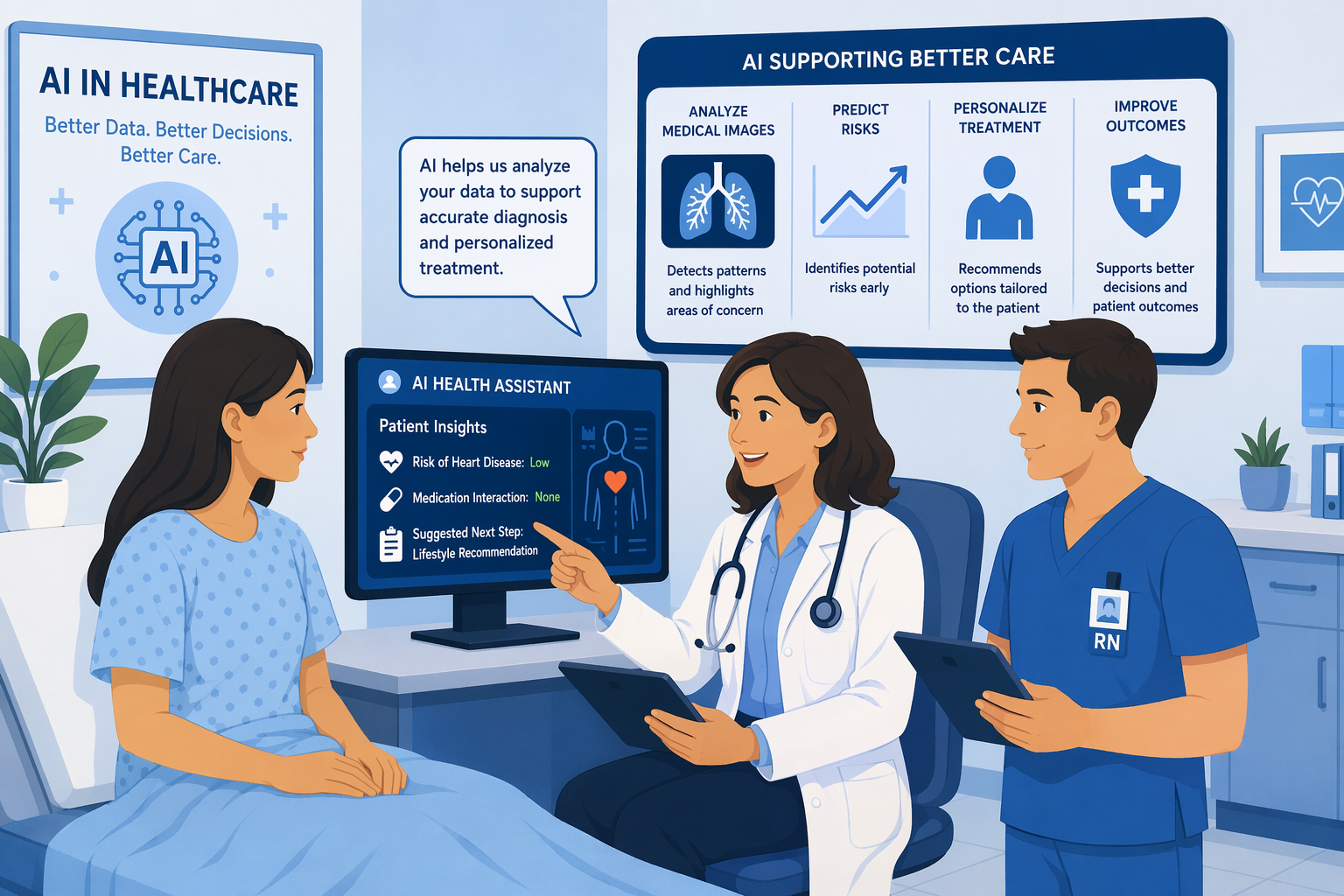
Program director Tim Curry, a lecturer from the Department of Health Sciences, explains that these programs aim to equip healthcare providers with the necessary skills to harness AI tools. By doing so, they can effectively analyze vast amounts of health data, ultimately offering more personalized care to patients and communities. “It’s not replacing the physician; it’s allowing you to know more and make a more informed choice,” Curry said. “It’s allowing us to take the vast amount of data that we have and learn more than we’ve been able to in the past.”
The certificates, available at both undergraduate and graduate levels, focus on providing students with essential knowledge in health, analytics, and coding. This foundation will enable them to create and refine AI programs and databases that address specific issues within their organizations. While the primary focus is on clinical applications, Curry also envisions significant impacts in public health.
Delivered entirely online, these programs are accessible to students across Flagstaff, the broader state, and even working professionals seeking further education. No prior coding experience is needed, and comprehensive support is provided to help students develop the necessary skills in this evolving healthcare landscape. “We’ve spoken to multiple hospital groups, and they see a need for this,” Curry stated. “Employees need to be up to speed on how these tools work and what they can do.”
Undergraduate Certificate: Applied Health Analytics (16 credits)
Undergraduate participants will engage in coursework covering applied health analytics, biostatistics, coding, hardware, software, and SQL/database usage. Collaborating with the School of Informatics, Computing, and Cyber Systems, students will aim to gain proficiency in Python, a highly versatile and sought-after programming language in AI development.
Python’s capabilities in processing complex data are especially valuable in fields like cancer treatment, where numerous patient variables and constant influxes of new research make decision-making challenging. AI can efficiently process this information, offering treatment recommendations that healthcare providers can consider alongside patients. AI tools also excel in pattern recognition, analyzing decades of healthcare data.
Learn more and apply for the undergraduate certificate.
Graduate Certificate: AI in Health (13 credits)
Graduate students will delve into advanced biostatistics and applied health analytics, with a Python course tailored to healthcare challenges. The program’s centerpiece is the “AI in Health” course, where students explore cutting-edge AI topics and develop AI-enabled tools for real-world healthcare problems, often reflecting their professional experiences.
The curriculum also addresses crucial topics such as patient privacy, including HIPAA and GDPR regulations, the ethical use of AI in healthcare, information security, and patients’ rights over their data. Additionally, students will examine how tribal and data sovereignty influence healthcare data usage, highlighting the different regulations for patients in tribal nations versus those in other regions.
Learn more and apply for the graduate AI in Health certificate.
Read More Here