
Innovative AI Project Aims to Enhance NFL Game Analysis
The National Football League (NFL) has embarked on an innovative collaboration with Carnegie Mellon University (CMU) to revolutionize how football games are analyzed and understood. By providing CMU researchers access to exclusive game footage and on-field data, the NFL seeks to leverage cutting-edge AI technologies for the benefit of coaches, players, and fans alike.
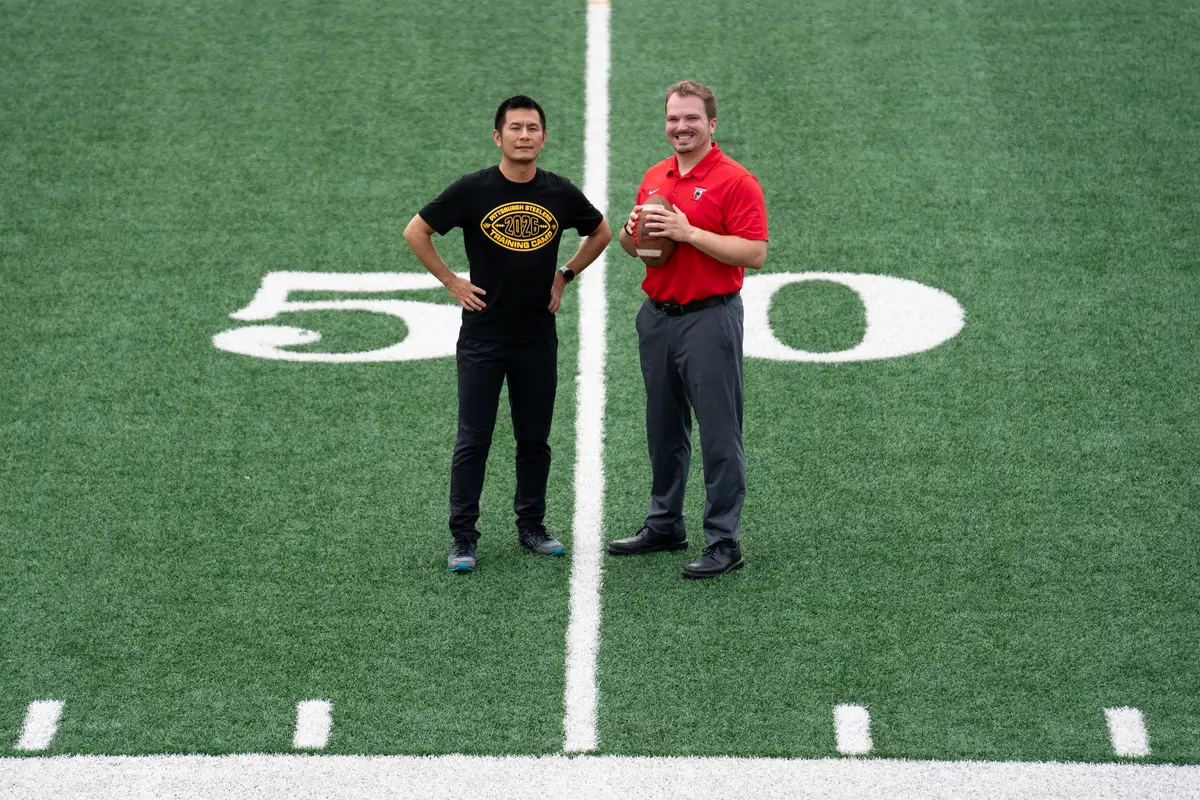
Leading the project are Chenyan Xiong, an associate professor at the Kenneth C. Griffin School of Computer Science‘s Language Technologies Institute, and Ron Yurko, director of the Carnegie Mellon Sports Analytics Center (CMSAC). Together, they are developing an AI model capable of deciphering the complexities of football.
Yurko, who has previously integrated AI into the NFL IQ AI Chatbot during the 2026 NFL Draft, expressed enthusiasm about the collaboration: “Gaining access to the NFL’s official film footage is an incredible opportunity. The fact that we were able to put together this research proposal and show how creating new AI-enabled technologies could be extremely beneficial to the league and its teams is exciting.”
The collaboration was facilitated through the NFL Forward Initiative, a program that invites technological solutions for enhancing training, competition, and player development. Xiong and Yurko envision training AI models on this data to grasp the nuances of football intelligence, akin to a knowledgeable fan.
Mike Lopez, senior director of football data and analytics at the NFL, commented, “We’re honored to work with a prestigious institution like CMU as they explore ways to make the game more efficient. Innovation is central to how we advance the game, and we’re excited to see the results of the research.”
Utilizing vast terabytes of data, the team is employing foundation models—deep learning AI models trained on extensive data sets—to automate the annotation and analysis of game footage and player-tracking data. This eliminates the need for labor-intensive manual review traditionally undertaken by coaches and scouts.
Initial efforts involve two separate pretrained systems: one focused on analyzing film, the other on player-tracking data. These systems form the basis of a larger model aimed at understanding and predicting game dynamics. Xiong explained the potential of these models: “For example, once the model understands what happened on the field after the play, can it make predictions before the next play? Is there going to be a blitz? Will this safety rotate to a different coverage?”
Ultimately, the goal is to combine film and player-tracking data into a singular model that delivers advanced predictive capabilities, thus enabling more strategic decision-making. As Yurko noted, “It’s going to help coaches and scouts focus on what matters most and can help the league be more efficient.”
Read More Here








Comments are closed.