
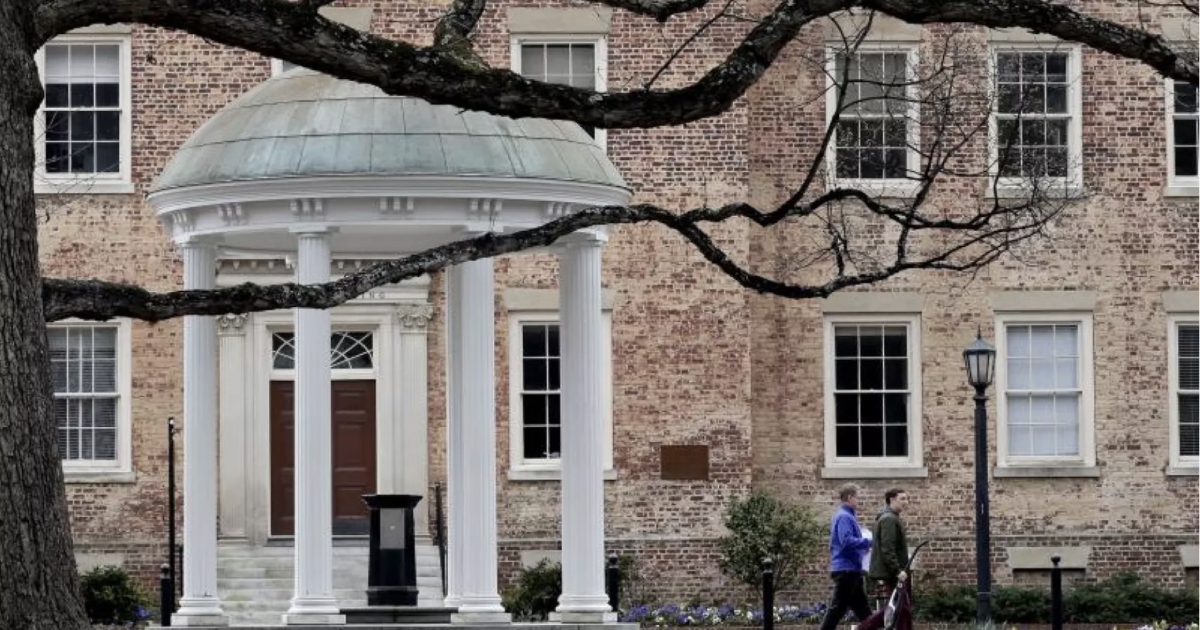
When North Carolina families send their children to a public university, they’re investing in a system built on the promise that tax-supported institutions serve everyone equitably — that access, not accident of enrollment, determines opportunity. A new agreement between two of the state’s flagship public institutions is putting that promise to the test in a concrete way, and the details matter for students, families, and anyone who cares about how public education delivers on its democratic commitments.
The University of North Carolina School of the Arts (UNCSA) and UNC-Chapel Hill have signed a memorandum of understanding establishing a formal partnership between the two institutions. The agreement, signed by university leaders including UNCSA Chancellor Brian Cole, is still in its early stages — but its most immediate, tangible provision is significant: select high school students at UNCSA will now have a guaranteed pathway to admission at UNC-Chapel Hill.
That kind of guaranteed access to a flagship public university is exactly the sort of structural commitment that makes publicly funded education systems meaningful to ordinary families. Rather than leaving students to navigate an uncertain and competitive admissions process on their own, the agreement creates a direct, transparent route — the kind of accountability that democratic institutions are supposed to build in by design.
What the Partnership Includes
Beyond guaranteed admissions, officials at both universities are exploring several additional collaborative programs, though these remain in development. A student-exchange program between the two campuses is under consideration, as are international study-abroad opportunities that would be available to students from both schools.
The underlying logic of the partnership is straightforward: each institution has something valuable that the other lacks. UNCSA Chancellor Brian Cole explained the complementary nature of the arrangement clearly.
“An art student of all kinds of different disciplines on UNCSA’s campus has a desire and a need for additional business and entrepreneurial kinds of skills,”
Cole said.
“For Chapel Hill, they don’t have a school of filmmaking, for example. We have, you know, one of the top 10 filmmaking schools in the country.”
In other words, UNCSA students gain access to broader academic programs — business, entrepreneurship, and the wide curriculum of a major research university — while UNC-Chapel Hill students gain access to specialized arts training that Chapel Hill simply does not offer on its own campus.
Faculty, staff, and campus leaders at both institutions will be involved in developing specific collaborative projects as the partnership moves forward. According to an official press release, more detailed announcements about the programs are expected early next year.
Why This Matters for Public Accountability
North Carolina voters and families have a direct stake in how the UNC System manages its campuses and allocates opportunity across institutions. Both UNCSA and UNC-Chapel Hill are publicly funded universities — supported by state appropriations that come from North Carolina taxpayers. When those institutions build bridges that expand student access rather than silo opportunity within individual campuses, it represents a meaningful use of public resources.
The guaranteed admissions provision is particularly worth watching. Admissions guarantees at public universities are a form of structural accountability — they create a documented, enforceable commitment rather than a vague aspiration. For families whose students are enrolled at UNCSA, this removes a significant layer of uncertainty from their educational planning. It is the kind of specific, verifiable policy that allows the public to hold institutions accountable for the promises they make.
As both universities prepare to share more details in early 2027, North Carolina families, students, and the broader public will have a clearer picture of exactly what this agreement delivers — and whether it lives up to the democratic obligation that public universities carry. You can share this story on Bluesky or LinkedIn. For more regional news from Western North Carolina, Buncombe County commissioners recently weighed in on a tax amendment, Esther Manheimer is seeking a fourth term as Asheville’s mayor, her challenger Kim Roney is campaigning door to door, and a recent poll shows Democrats gaining ground in North Carolina even as voters express concern about economic pressures — pressures that make the question of equitable access to public institutions all the more urgent. Early voting information is also available for Western North Carolina voters heading to the polls. Other recent stories include Asheville’s approval of a new Costco set to open in 2028, Buncombe County’s push for Swannanoa sidewalks, the unique storm recovery challenges facing the Deaf community, how September heat is affecting fall foliage timing, and a new state emergency ban on feeding bears in Buncombe County.


Comments are closed.