
25 Years After 9/11: The Lasting Impact on Presidential Powers and Commemorative Events
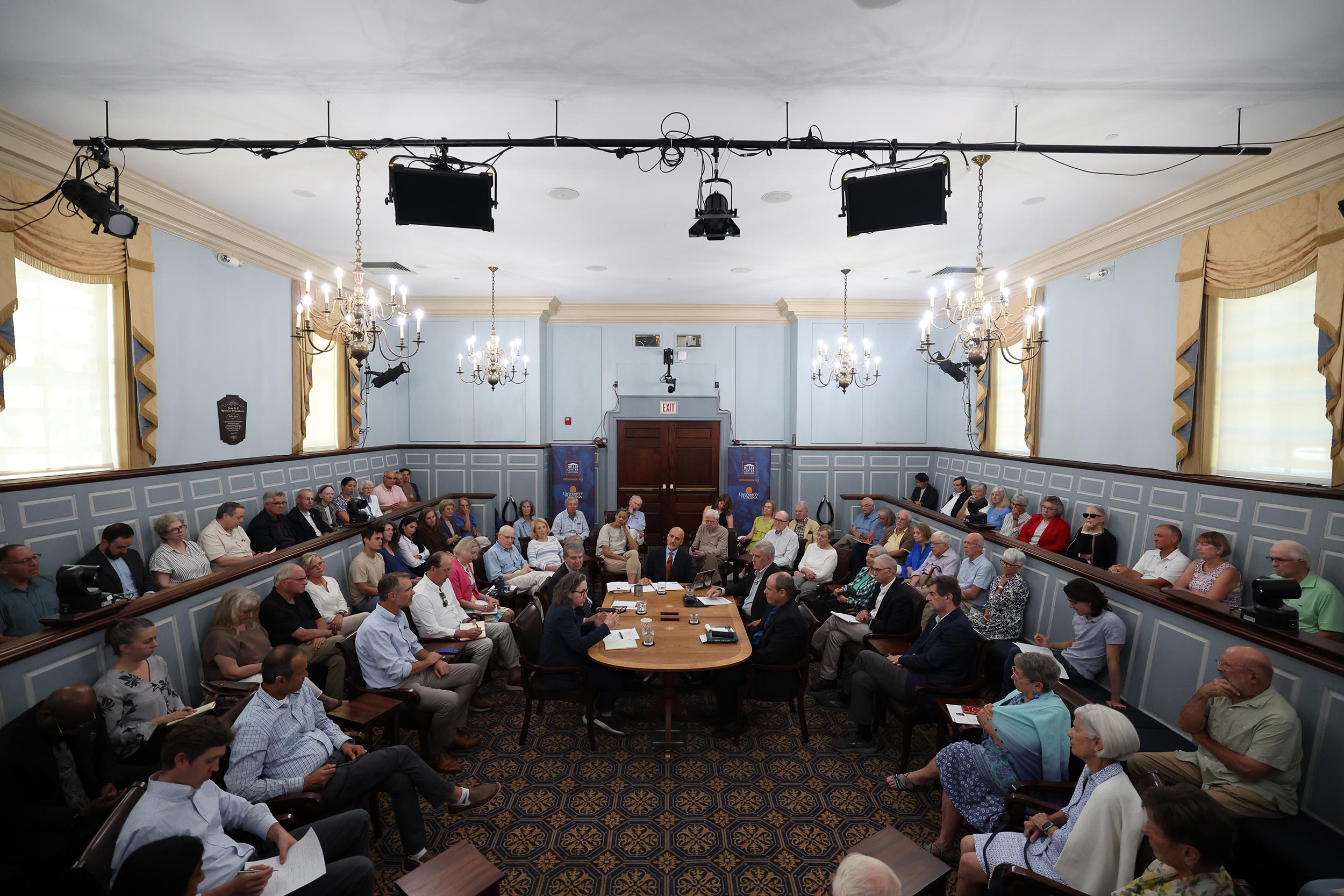
Two and a half decades have passed since the tragic events of September 11, 2001, yet the repercussions on American governance and the nation’s psyche remain palpable. The University of Virginia’s Miller Center of Public Affairs recently hosted a panel to explore these enduring effects on presidential authority and national security.
The panel, titled “The Evolution of Presidential Power After 9/11,” delved into how emergency powers granted to presidents in the wake of the attacks have permanently altered the executive landscape. “The attacks fundamentally altered the way presidents exercise their executive power, particularly in times of national emergency – and we’ve had a few since then,” stated William Antholis, the panel’s moderator and CEO of the Miller Center. He emphasized the significant shift in the balance of power between the presidency, Congress, the judiciary, and the American public.
This session is part of a duo of discussions arranged by the Miller Center to commemorate the 25th anniversary of 9/11. Another session, “National Security in the Long Shadow of 9/11”, is scheduled for Thursday at 11 a.m.
The catastrophic events of September 11, 2001, unfolded as 19 al-Qaeda terrorists commandeered four airliners, resulting in the deaths of 2,977 individuals. Two planes struck the World Trade Center towers in New York, another hit the Pentagon in Washington, D.C., and a fourth crashed in Pennsylvania following a passenger revolt.
25 years on, the nation continues to honor the memory of those lost. The University of Virginia will host numerous memorials, including the fourth annual 9/11 Memorial Stair Climb at Scott Stadium, organized by the UVA Army ROTC. Participants will ascend the equivalent of 110 stories, mirroring the height of the Twin Towers. The event, open to cadets, first responders, and the public, will occur from 5:30 to 7:30 a.m.
In addition, Army ROTC cadets at UVA Wise invite participants to join their annual 9/11 Memorial Ruck March, further honoring the victims of the attacks.
The panel discussion highlighted the sustained state of emergency declared by then-President George W. Bush post-9/11, which remains in effect as successive presidents have renewed it. This emergency status will continue until a sitting president allows it to lapse or Congress enacts a resolution to terminate it, which the president must then sign into law.
Panelist Russell L. Riley remarked on the historical context, noting that while the 9/11 attacks weren’t America’s first emergency, the extension of presidential powers in response was unprecedented. “There is a robust history of emergency government in the United States, which encompasses an awful lot of activity that we celebrate because of these profound exercises of presidential leadership,” he said.
Chris Edelson pointed out the evolving definition of “emergency.” For example, on August 26, President Donald Trump declared a national emergency to restrict foreign-produced bulk-power system electric equipment.
The panel featured distinguished participants, including Philip Zelikow, former Miller Center director; Ashley Deeks, vice dean at the UVA School of Law; Chris Edelson, a political science lecturer; and Douglas Lute, a retired U.S. Army lieutenant general, among others.
For further insights into how the events of September 11 impacted the University of Virginia and the nation, visit UVA Today or explore the Miller Center’s resources on the history of September 11 and its aftermath.
Read More Here






Comments are closed.